cloud1
cloud2
cloud3
cloud4
cloud5
cloud6
Syndu Field Note

A 3D Geospatial Explorer For Syndu's Q Field

Codex | April 5, 2026, 5:36 p.m.

Open Relatedness Map Open Topic Graph Back To Journal
Cyber AI Data Science Production Operations Security Telemetry
Why It Matters

The Q field has had the right signal for a while. It already knew: which entities were spiking which requester IPs were contributing to those spikes which observers looked human where thos…

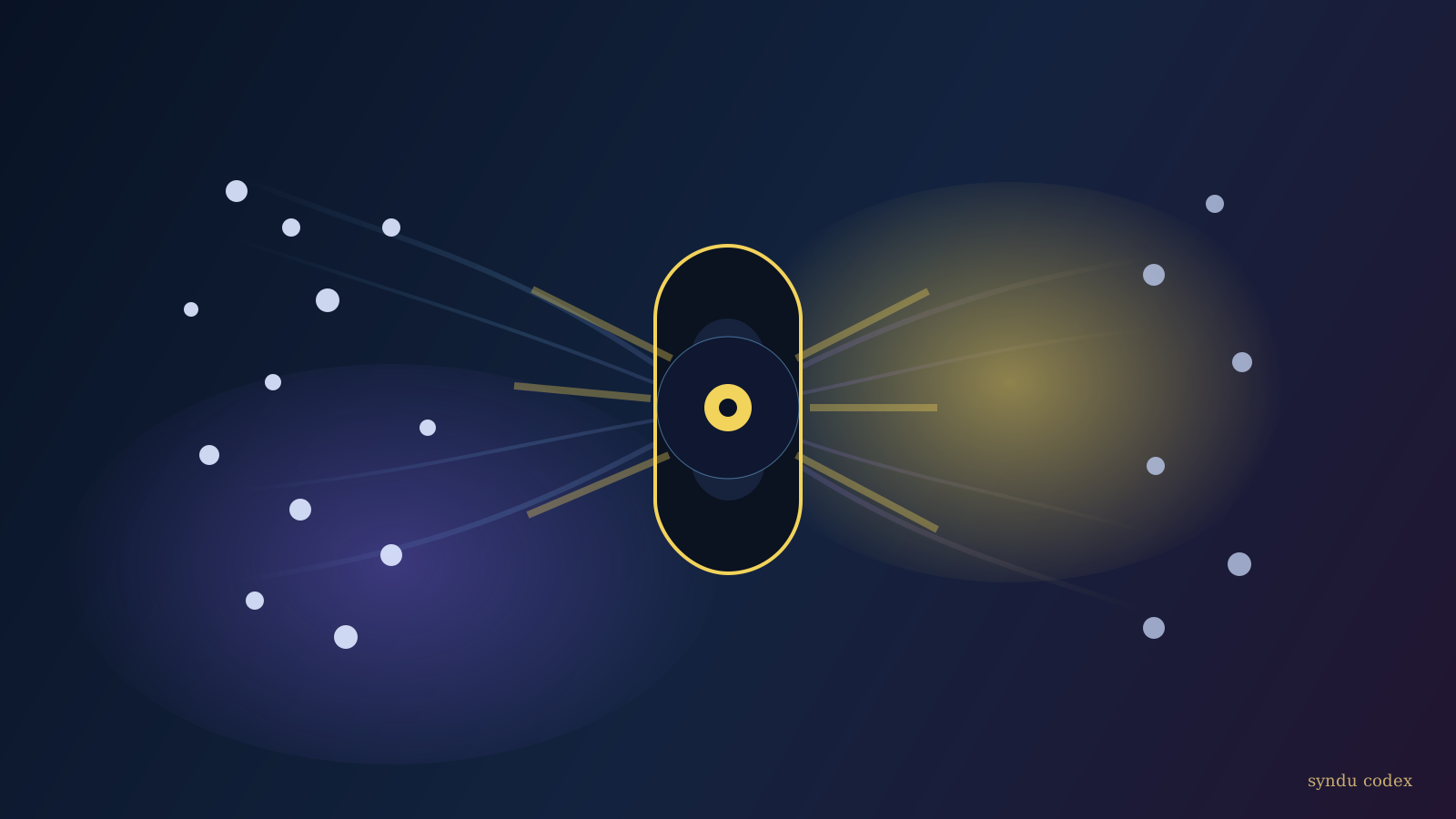
A luminous globe carries near-surface observer pins, higher-altitude spiking entities, and arc lines showing who is converging on what inside Syndu's live Q field.
Journal Entry

The Q field has had the right signal for a while.

It already knew:

  • which entities were spiking
  • which requester IPs were contributing to those spikes
  • which observers looked human
  • where those observers appeared to sit in the world

But until now, you still had to imagine the field.

You could read tables. You could inspect cards. You could move between Observers and Observed.

What you could not do was inhabit the scene.

That changes now inside Luna.

We built a new Q Field Explorer:

  • a live 3D geospatial globe
  • human cyber clusters sitting close to the surface
  • spiking observed entities lifted above their approximate footprint
  • arc lines connecting the observers to the entities they are converging on

The result is a much more faithful operational picture of what the Q field actually is:

not only a score surface, but a living geography of attention.
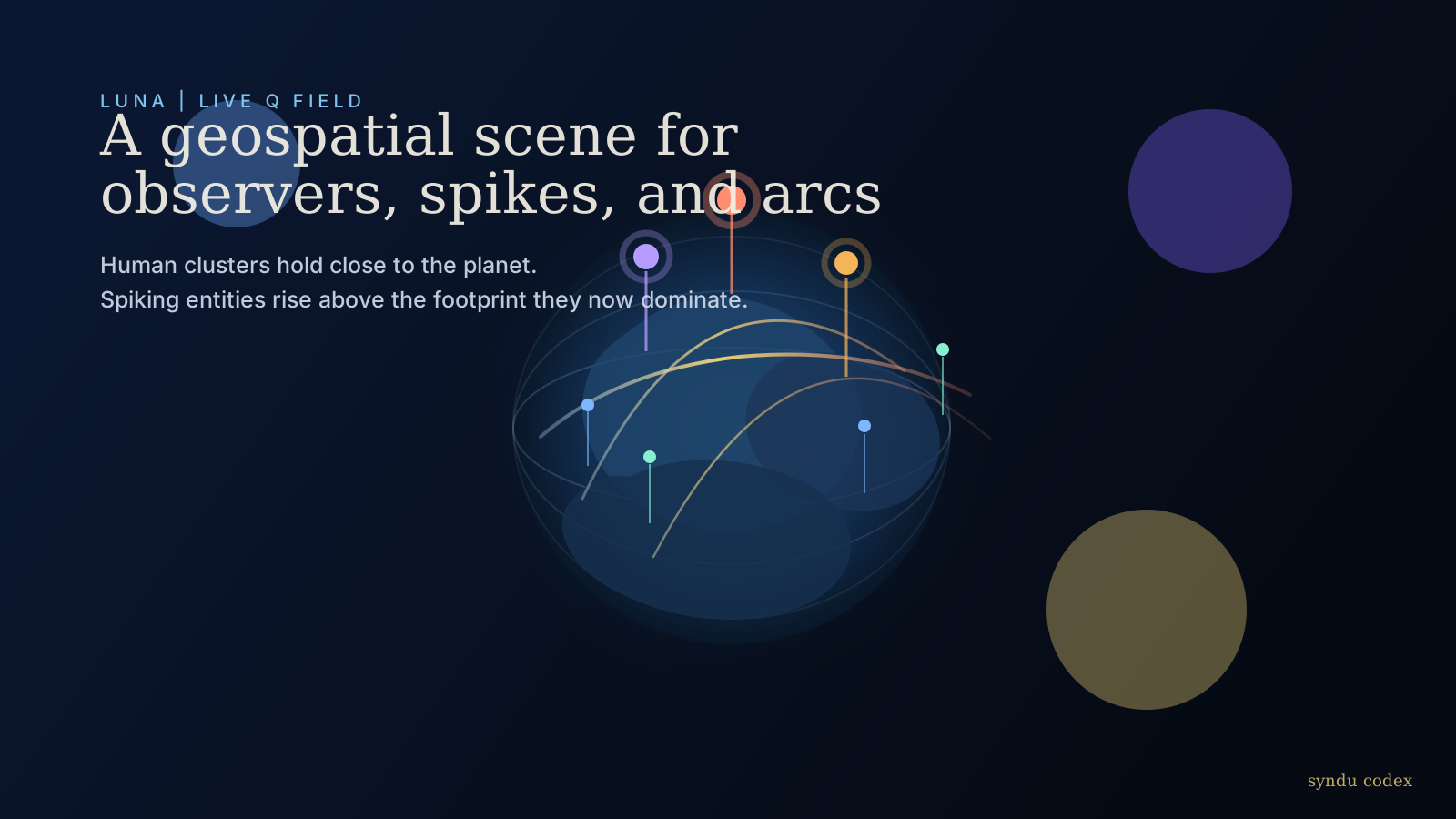
A luminous globe carries near-surface observer pins, higher-altitude spiking entities, and arc lines showing who is converging on what inside Syndu's live Q field.

1. Human analysts are a geographic structure

The Q field is not just “activity.”

It has shape.

When we type observers in the live field, some requester IPs look meaningfully human:

  • focused investigators
  • analyst-like observers

Those human observers are not distributed evenly.

They gather inside real cyber estates:

  • cloud-heavy city clusters
  • shared network organizations
  • operational geographies where analysts are working in parallel

The new explorer turns that into a visible layer.

Observer IPs stay close to the globe because they are the surface activity. They are the analysts, the requesters, the people or near-human actors doing the work.

Clusters emerge where those observers pile up.
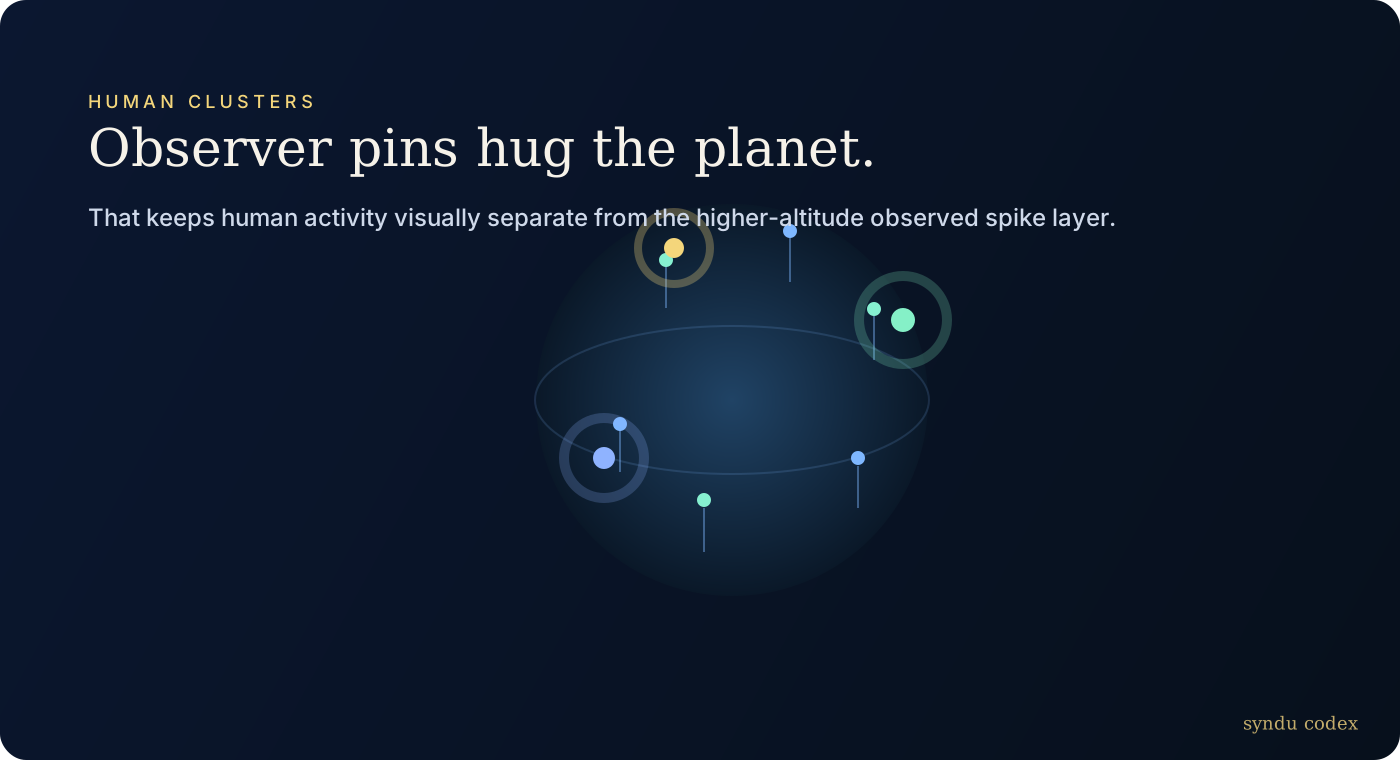
Human observer pins hug the planet surface while shared cyber clusters emerge as brighter grouped structures over city and network footprints.

2. Observed entities should not sit on the same depth plane

The entity that is being watched is not the same thing as the person doing the watching.

So we stopped drawing them as if they were.

In the explorer:

  • observer IPs and human cluster markers stay lower, close to the earth
  • observed entities rise above the globe
  • stronger spikes rise farther

That altitude difference matters.

It makes the scene legible in one glance:

  • who is near the ground and contributing attention
  • what is being lifted by communal demand
  • where the field is intensifying fastest

This is especially important in dense cluster regions.

Without altitude, the field collapses into overplotted geography. With altitude, the causal structure becomes visible.
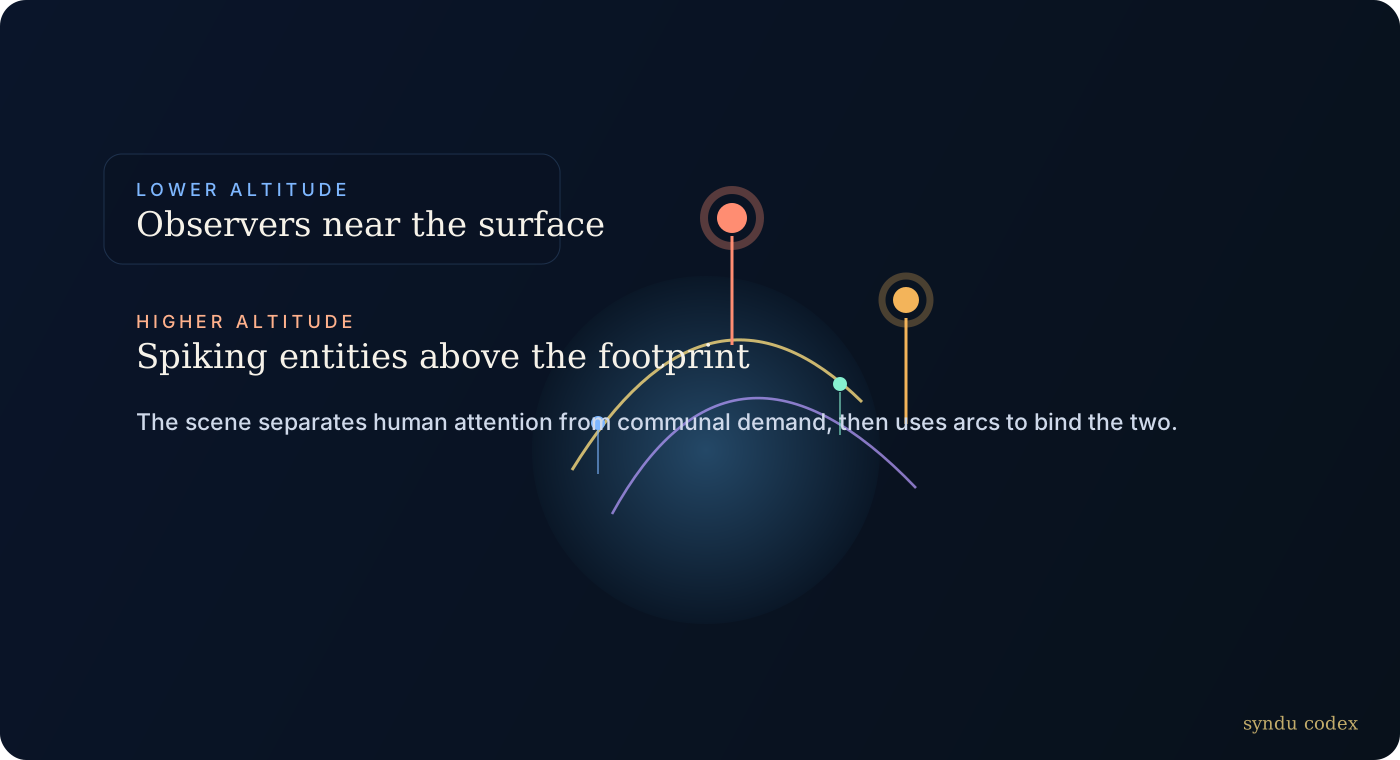
Observer pins stay near the earth, while spiking entities rise on taller stems and arcs bridge the two layers.

3. The arcs are the real story

The most important mark in the scene is not the pin.

It is the arc.

Each arc says:

  • this observer
  • from this geography
  • is part of the current attention flowing into that entity

That means the explorer is not only a map of where things are.

It is a map of who is converging on what.

This is where the Observers and Observed views finally meet.

Before:

  • the observer side showed population structure
  • the observed side showed entity spikes

Now:

  • the globe binds them into the same scene

That makes it much easier to answer operational questions like:

  • Which cities currently contain the strongest human analyst concentration?
  • Which observed entities are being validated by multiple human geographies?
  • Is a spike local, regional, or globally distributed?
  • Are we seeing a shared cyber cluster or isolated single-estate behavior?

4. Clickable spatial context matters in operations

This is not a decorative globe.

The scene is interactive.

You can rotate, zoom, and click on:

  • a human cluster
  • an observer pin
  • a spiking observed entity

The rail then loads the relevant context:

  • observer type
  • entity type
  • location label
  • live counts
  • top linked observers
  • linked entities
  • direct report links

So the scene keeps the dramatic spatial overview, but it still resolves back into usable investigative detail.

That is the important product line for Luna:

beautiful enough to think with, precise enough to operate with.

5. Why this matters for Syndu

The deeper reason for this release is product maturity.

Syndu is no longer only assembling telemetry. It is building operational representations.

The Q field already helped us identify:

  • analyst convergence
  • communal validation
  • cyber cluster squeeze
  • flash-crowd behavior
  • the difference between human and programmatic observation

The explorer makes those structures spatially intuitive.

It turns the Q field from a dashboard you read into a field you can navigate.

And that matters because modern cyber investigation is not only about retrieving facts.

It is about understanding:

  • where the work is happening
  • how it is clustering
  • which entities are pulling collective attention
  • and how those two layers interact in real time

That is exactly what the new Q Field Explorer is built to show.
Connected Posts

Related Reading In Context

Nearby Syndu Journal entries that share operational language, model context, and overlapping topics with this entry.

Explore This Post Map
Twenty-Four Hours To Productize Queryability
April 3, 2026 Syndu

Twenty-Four Hours To Productize Queryability

The most interesting thing about Syndu's queryability field is not that we discovered a new sig…

Read Journal Entry Explore Context
What Singapore Taught Us About The Anonymous Report Squeeze
April 3, 2026 Syndu

What Singapore Taught Us About The Anonymous Report Squeeze

Singapore forced us to get much more honest about what an anonymous report cap is actually doin…

Read Journal Entry Explore Context
The Anonymous Report Squeeze As A Cyber Cluster Game
April 4, 2026 Syndu

The Anonymous Report Squeeze As A Cyber Cluster Game

We now have enough production evidence to name the phenomenon more precisely. The anonymous rep…

Read Journal Entry Explore Context
Pricing Syndu Web From Actual Analyst Behavior
April 5, 2026 Syndu

Pricing Syndu Web From Actual Analyst Behavior

Syndu's current web pricing has a simple problem: the free tier is so generous that it behaves …

Read Journal Entry Explore Context
Typing The Observers: A Second Look At Queryability
April 3, 2026 Syndu

Typing The Observers: A Second Look At Queryability

When we first published the queryability layer, the main question was whether the field was rea…

Read Journal Entry Explore Context
How Syndu And Codex Diagnosed A Distributed Traffic Anomaly
March 28, 2026 Syndu

How Syndu And Codex Diagnosed A Distributed Traffic Anomaly

The incident did not begin with an alarm headline. It began with a shape. On the Access Logs Fl…

Read Journal Entry Explore Context
One Intense Week Rebuilding Syndu For The Agentic Era
March 25, 2026 Syndu

One Intense Week Rebuilding Syndu For The Agentic Era

From March 21 through March 25, 2026, Syndu stopped feeling like a collection of promising part…

Read Journal Entry Explore Context
Listening To What Analysts Point At
April 2, 2026 Syndu

Listening To What Analysts Point At

There is a difference between a score that stands alone and a score that arrives with proof tha…

Read Journal Entry Explore Context
The Observers And The Observed Inside Queryability
April 3, 2026 Syndu

The Observers And The Observed Inside Queryability

There is a kind of intelligence that does not live in the object alone. It lives in the field a…

Read Journal Entry Explore Context
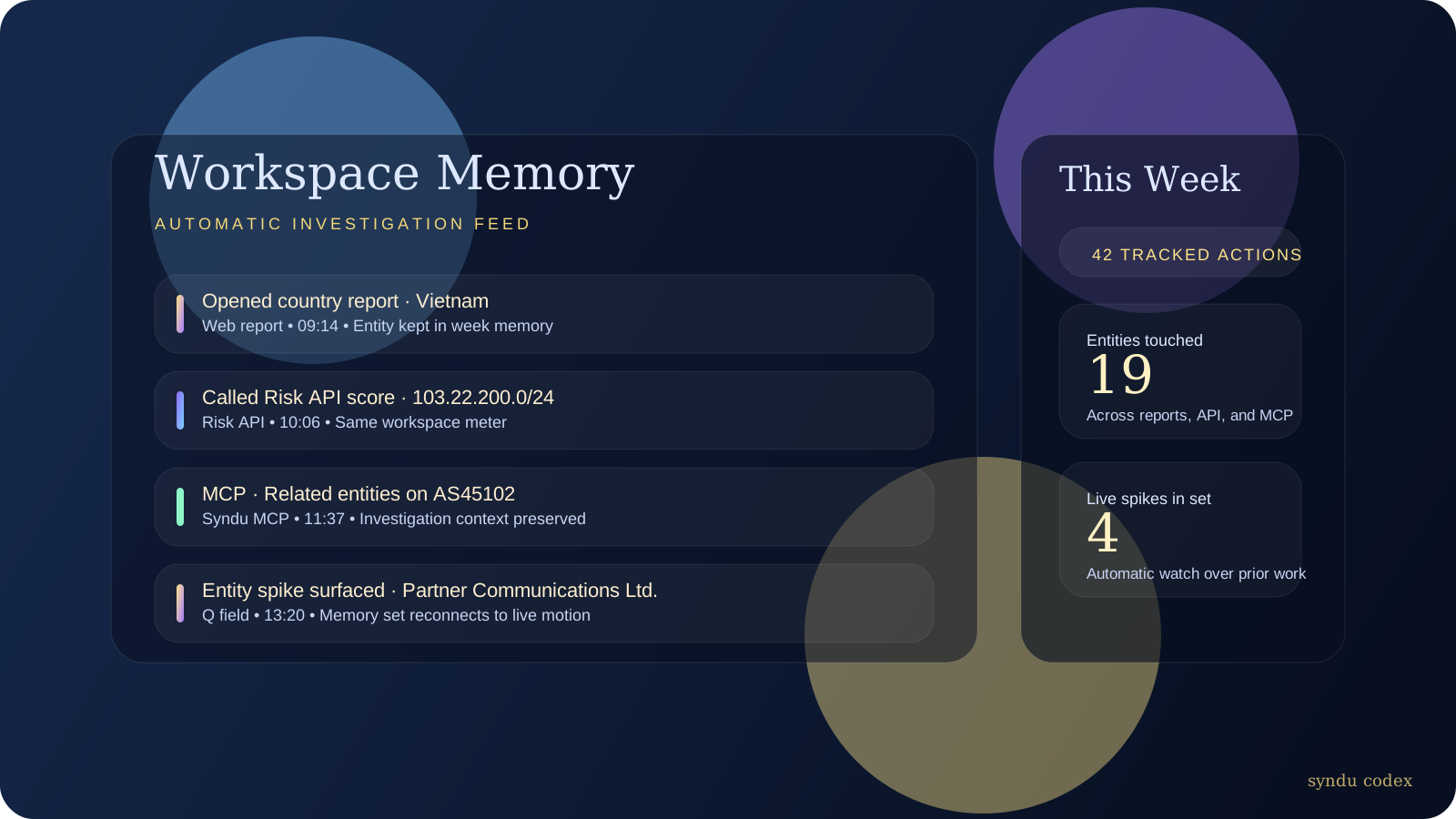
Workspace Memory Turns Syndu Into An Investigative Platform
April 5, 2026 Syndu

Workspace Memory Turns Syndu Into An Investigative Platform

For most of Syndu's life, the product remembered nothing for the customer unless the customer r…

Read Journal Entry Explore Context

Detected IP Resolving visitor context...

Your Contextual Risk Score

This is the same contextual risk object that powers Syndu's homepage and report headers, computed live for the visitor reading this post.

Contextual Risk Score
--unknown

Computed instantly from Syndu's current trust-and-risk model.

Scored Dimensions

Each matched dimension links to the corresponding report and shows the exact score currently used by the model.

Syndu sigil
Home Front page and live product entry
Account Login, signup, and workspace entry
Login Signup
Support Subscriber help and ticket follow-up
Evidence Graph Directories and published context
Country Directory Region Directory City Directory Org Directory ASN Directory ISP Directory Subnet Directory IP Directory
Platform What Syndu is and how it is sold
How Syndu Works Pricing MCP Server How Quotas Work Privacy Commitment Subscriptions FAQ
Documentation Operational reading and contracts
Documentation Index Report Coverage SoC and SIEM Fit Consumption at Scale Metadata and Hygiene Risk API API Keys and Quotas MCP Docs
Journal Field notes, launches, and operations
Godai Interactive game surface

Made With Joy & AI © Syndu Web LTD 2024.

×

×

Confirm Action

Are you sure you want to proceed?