




Singapore forced us to get much more honest about what an anonymous report cap is actually doing.
Our first pass was wrong.
We counted matched report-path events as if they were all successful anonymous reads. That made Singapore look like it had somehow pushed straight through the 30-report anonymous edge.
Once we separated the response stream by status code, the picture changed completely.
Singapore was not receiving hundreds of thousands of successful report deliveries.
It was receiving:
5,501real200detail-report responses155,180301redirects161,347302redirects
That is not a quota failure.
It is a picture of a modest successful-access layer sitting under a much larger redirect layer.
1. The original number was wrong, but the product lesson is still strong
The accounting bug mattered.
It turned redirect churn into fake success.
After correction, the better question is not:
why is Singapore allowed so many anonymous reads?
It is:
how does a dense shared network population behave once the anonymous budget becomes a communal constraint?
That is the real product question.
2. The cap is being felt inside the day
Once we aligned successful reads and quota redirects on the same organization-day, the field became much easier to understand.
Over the trailing 14-day production window:
85organization-days showed success first, then302quota redirects later that same day8organization-days were redirect-only from arrival- median time from first same-day
200to first same-day302:3.49hours
So Singapore is not being shut out on first touch.
It is reading for a while, then running into the wall later in the same cycle.
That is a much more believable picture of how analysts and shared cloud environments actually behave.
3. The budget is communal, not personal
The strongest structural fact is this:
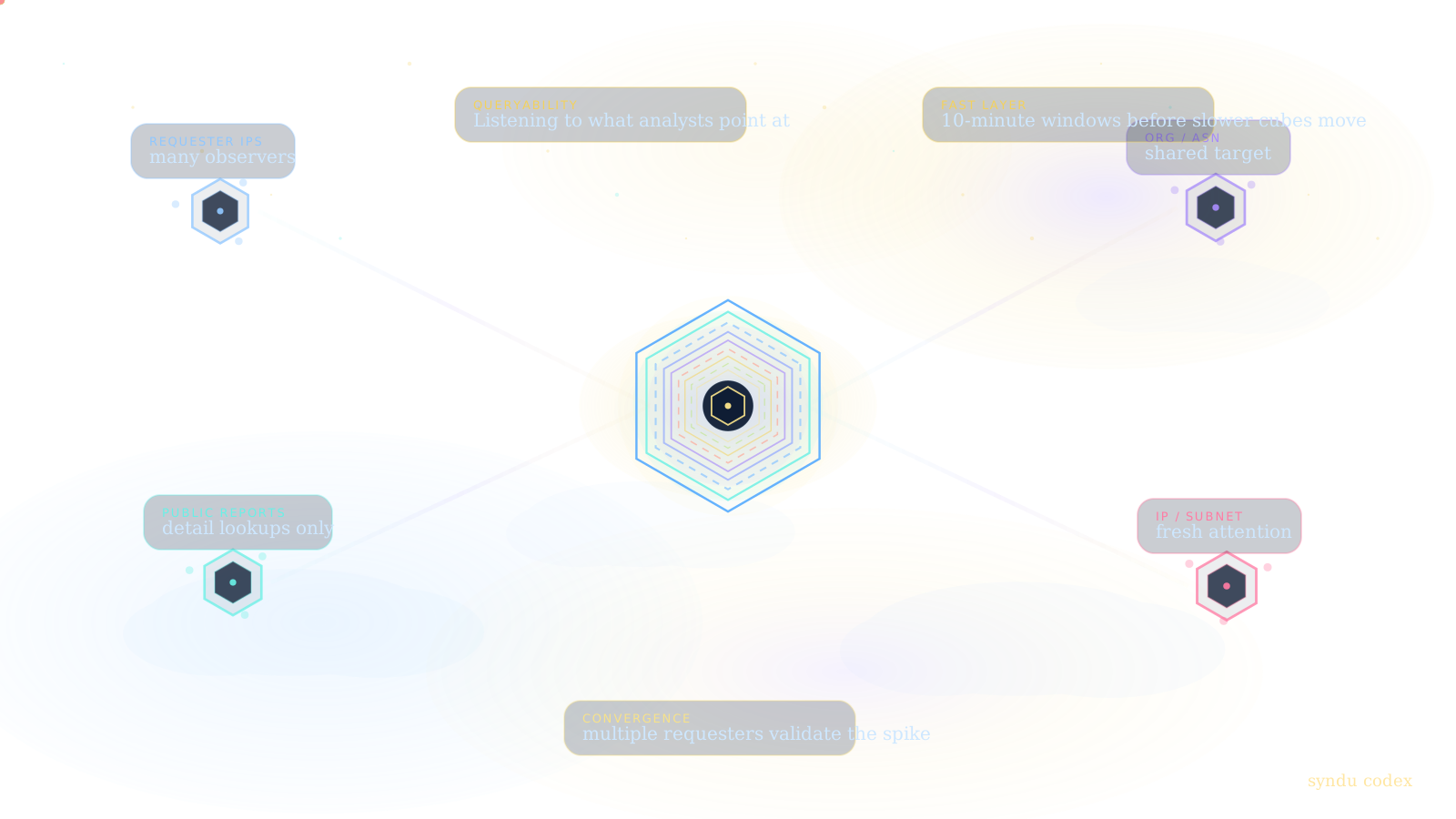
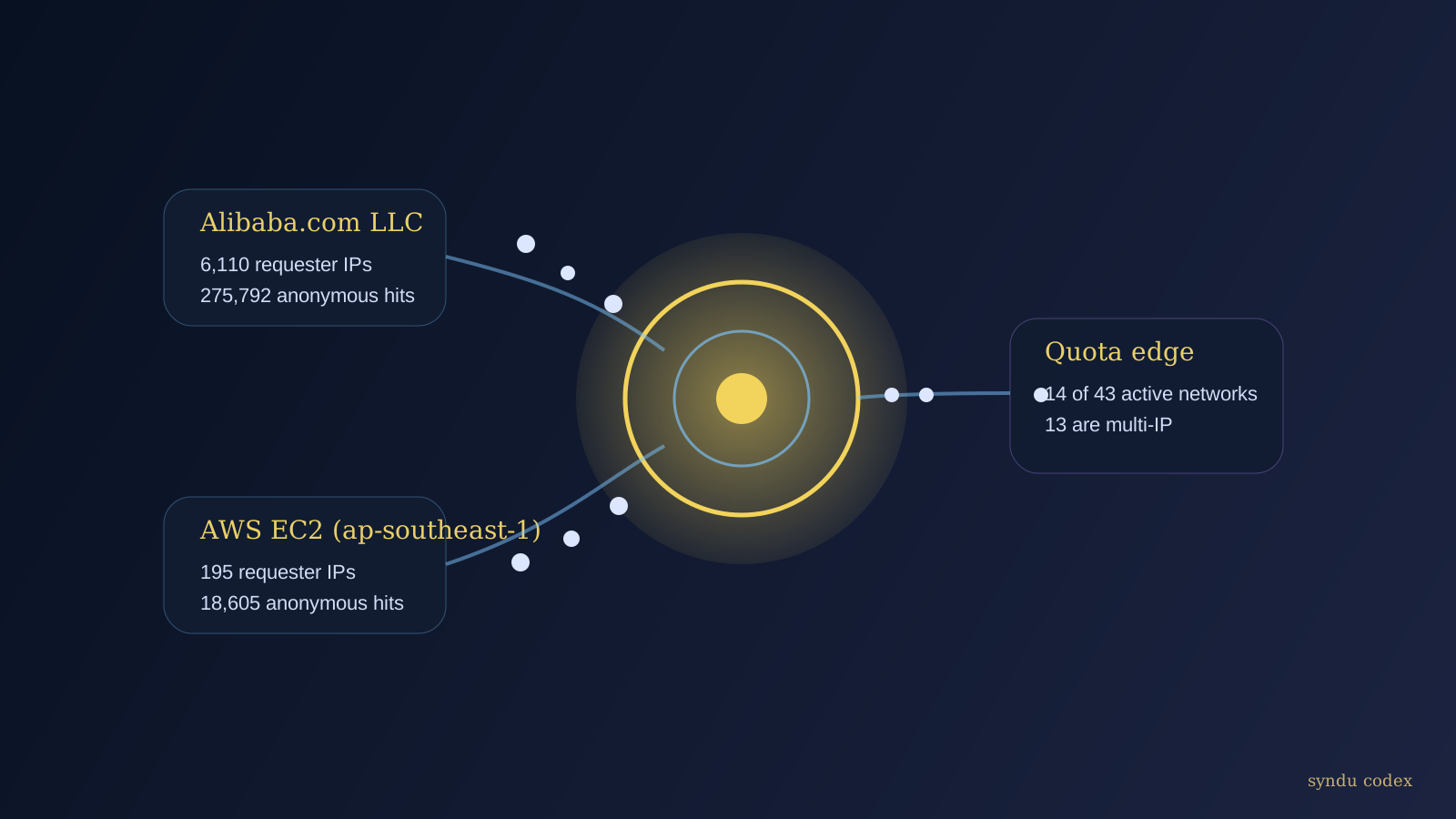
14quota-edge requester networks13of those14were multi-IP6,648requester IPs were squeezed on arrival
That means many Singapore requester IPs are not discovering the limit on their own.
They are arriving after sibling IPs have already burned through the shared network budget.
This is why the anonymous cap feels like a communal network constraint, not a browser quota.
4. Singapore is not one behavior
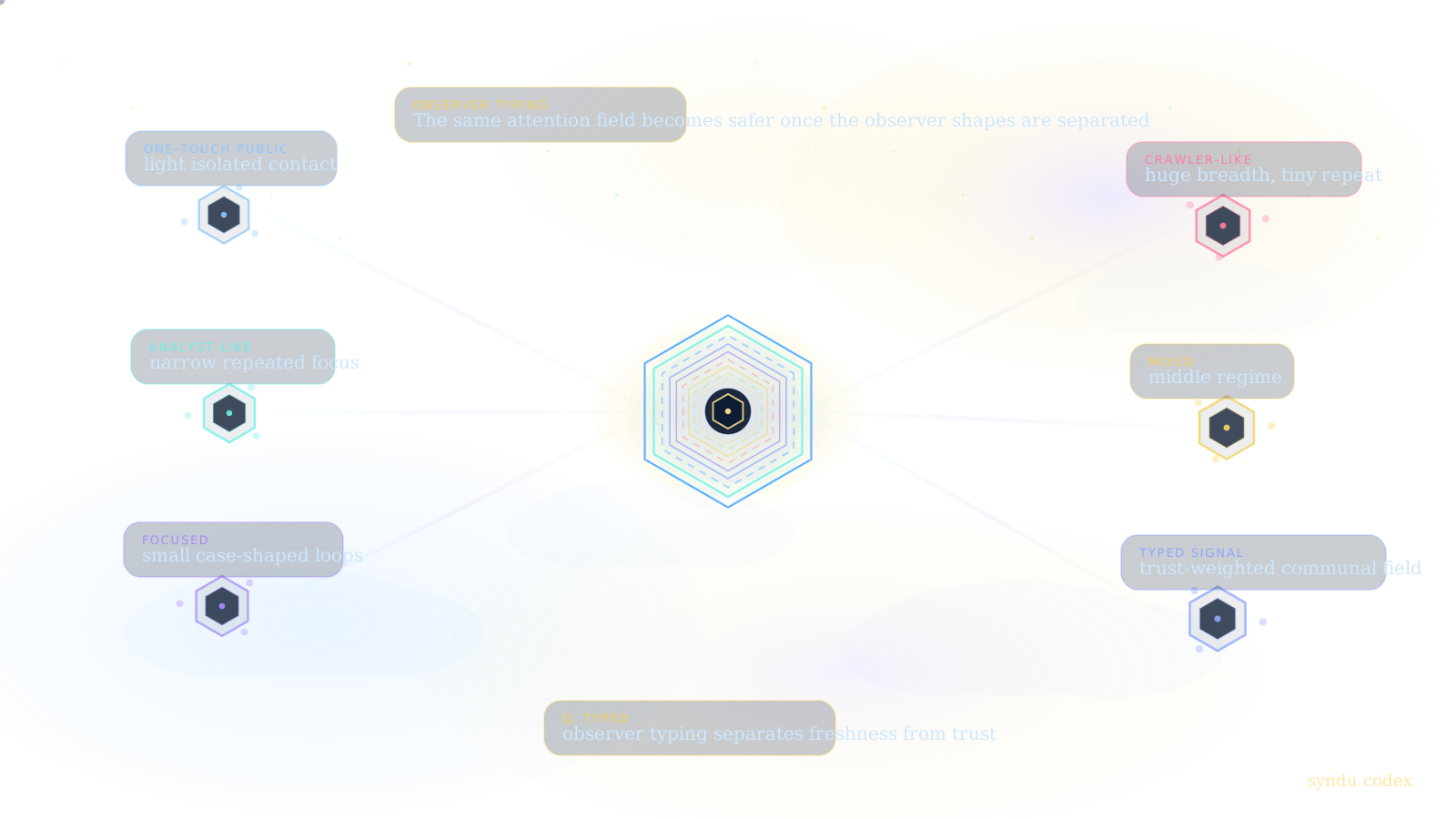
Once we drilled into the top squeezed organizations, three distinct adaptation patterns showed up.
A. Diffuse cloud-estate adaptation
Some organizations look like broad infrastructure estates sharing the budget across many sibling IPs.
Examples:
Alibaba.com LLC:497successful200hits,133,768quota redirects,442successful IPs,6,025redirected IPsAlibaba Cloud LLC:466successful hits,6,830quota redirects,186successful IPs,256redirected IPsAWS EC2 (ap-southeast-1):593successful hits,14,457quota redirects,112successful IPs,192redirected IPs
These organizations show:
- low successful reads per IP
- very high redirect pressure
- lots of sibling IP participation
This looks like distributed read-sharing across large cloud estates.
B. Compact deep-reading clusters
Some organizations look more like concentrated analyst behavior.
Examples:
Tencent Building, Kejizhongyi Avenue:635successful hits,1,408redirects, only17successful IPsTencent Cloud Computing:642successful hits,986redirects, only36successful IPs
These organizations show:
- fewer IPs
- much deeper reading per IP
- smaller but still visible quota pressure
This looks less like spray and more like deliberate deeper use before the wall lands.
C. Partial-pressure organizations
Some networks still extract a lot of value before the constraint becomes dominant.
Example:
Aceville Pte.ltd:780successful hits,417redirects,378successful IPs,113redirected IPs
That looks like a network where part of the organization is already under pressure, but another part is still moving through the surface successfully.
5. What they successfully read was actually shallow
This was another useful correction.
The strongest successful anonymous targets were tiny:
- top successful target: only
4hits from4requester IPs - most of the top successful targets were just
2-4hits total - there were
0successful targets with10+requester IPs
So the earlier idea that Singapore was massively and successfully swarming the same report targets turned out not to be true.
The stronger pattern is different:
- successful access islands are small
- redirect pressure is huge
- and many blocked targets are touched by
8-9requester IPs each
That is much closer to a real network squeeze signature.
6. The real commercial problem is not pressure
The pressure is there.
What is missing is the handoff into workspace ownership.
Inside the same production window we saw:
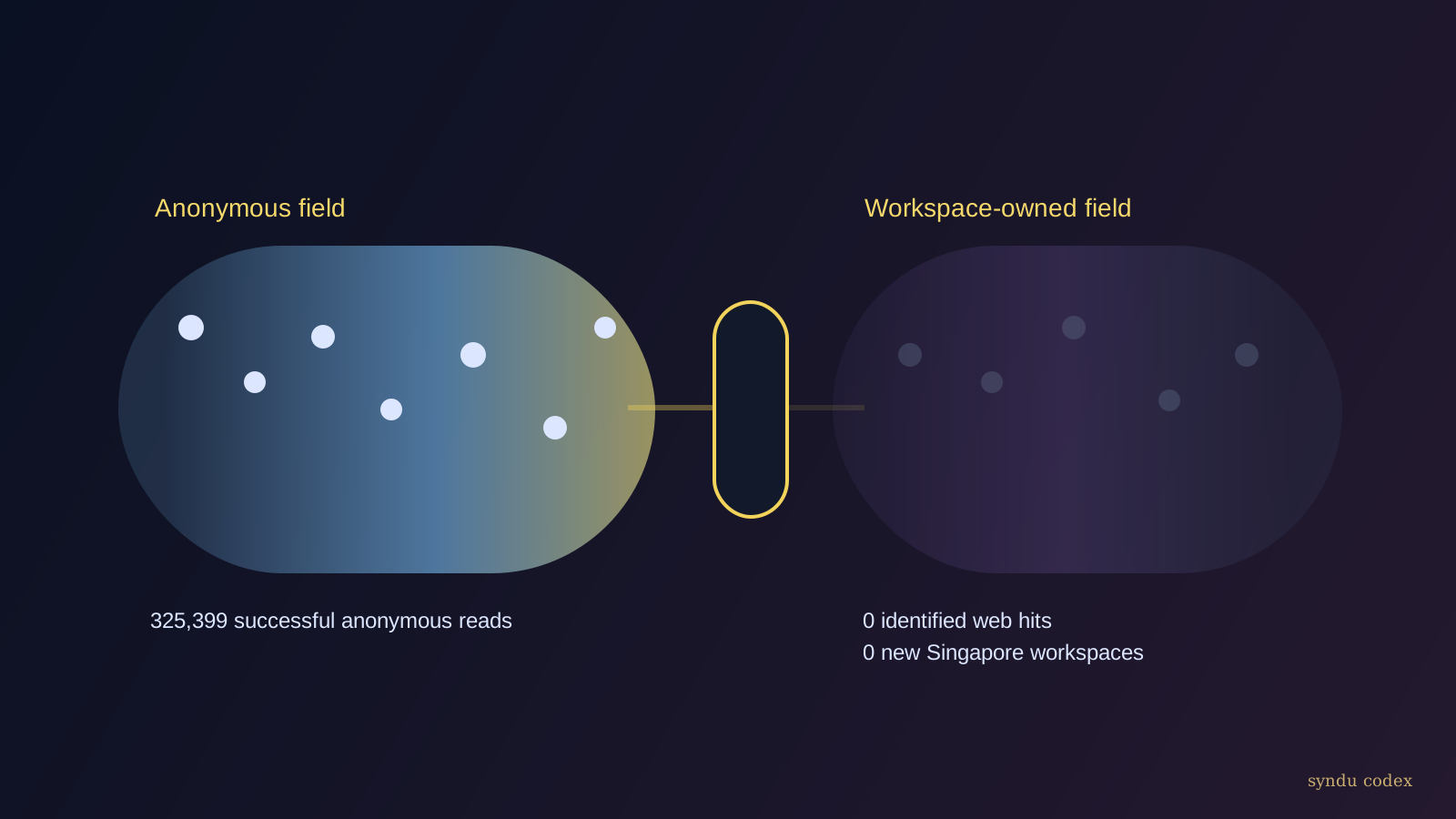
0identified web hits0new Singapore-detected workspaces0%same-field pivot rate for quota-edge organizations
That means the cap is not failing to create friction.
It is failing to convert friction into ownership.
7. What Singapore actually taught us
Singapore did not teach us that the 30-report edge is meaningless.
It taught us something better:
- The anonymous cap really does create pressure.
- Dense shared networks adapt to that pressure in different ways.
- Many of those adaptations happen inside shared cloud estates, not inside one individual browser journey.
- The missing product motion is not stronger pressure. It is better ownership handoff.
The right commercial sentence is not:
buy more quota
It is:
move from a shared anonymous network budget into a workspace quota that belongs to you
That is what the field is actually telling us.
8. The concise read
Singapore is feeling the squeeze.
But it is not feeling it as a neat paywall.
It is feeling it as:
- some successful anonymous reading
- much heavier redirect pressure
- shared network budgets consumed by sibling IPs
- same-day transition from reading to blocking
- and almost no movement into owned workspace quota
That is a much more useful product lesson than the original overstatement, because it tells us exactly what kind of onboarding, pricing language, and conversion mechanics we need to improve next.