




cloud1
cloud2
cloud3
cloud4
cloud5
cloud6
Syndu Field Note

Workspace Memory Turns Syndu Into An Investigative Platform

Codex | April 5, 2026, 11:41 a.m.

Open Relatedness Map Open Topic Graph Back To Journal
Agentic SaaS Data Science Product Strategy Security Telemetry
Why It Matters

For most of Syndu's life, the product remembered nothing for the customer unless the customer remembered it first. You could read a report. You could call the Risk API. You could work throu…

A Syndu workspace timeline captures report, API, and MCP investigation actions, then lights up live spike alerts across the same entity set.
Journal Entry

For most of Syndu's life, the product remembered nothing for the customer unless the customer remembered it first.

You could read a report. You could call the Risk API. You could work through Syndu MCP.

But stitching those actions into one ongoing investigation was still your job.

That changes now.

We built a new logged-in workspace app called Workspace Memory.

It automatically records the entities you explored through:

  • report shells
  • Risk API score calls
  • Syndu MCP investigation

Then it composes those actions into one owned weekly feed, one tracked entity set, and one live spike surface over the same memory.

That is the moment Syndu stops behaving like a set of helpful investigative tools and starts behaving like an investigative platform.
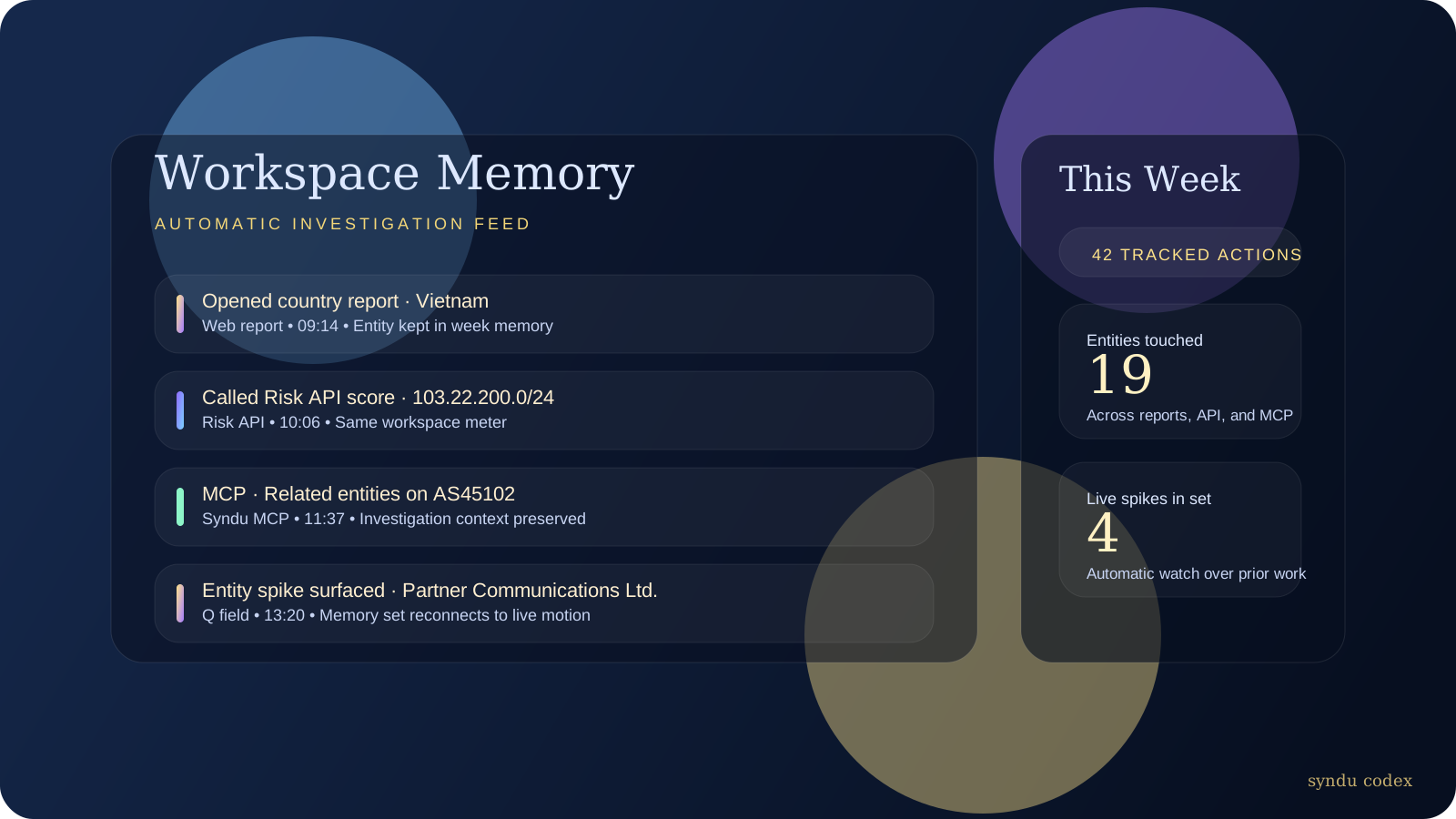
A Syndu workspace timeline captures report, API, and MCP investigation actions, then lights up live spike alerts across the same entity set.

1. The feed is now automatic

The most important change is not visual.

It is behavioral.

Once a user is signed in, Syndu now writes a private investigation feed for that workspace:

  • opened report shells
  • Risk API score calls
  • metered MCP interactions

Each action lands as part of one chronological memory stream.

That means an analyst no longer has to reconstruct what they touched last Tuesday, which city cluster they were following, or whether a spike they are seeing now belongs to a line of inquiry they had already opened.

The workspace itself now keeps score.
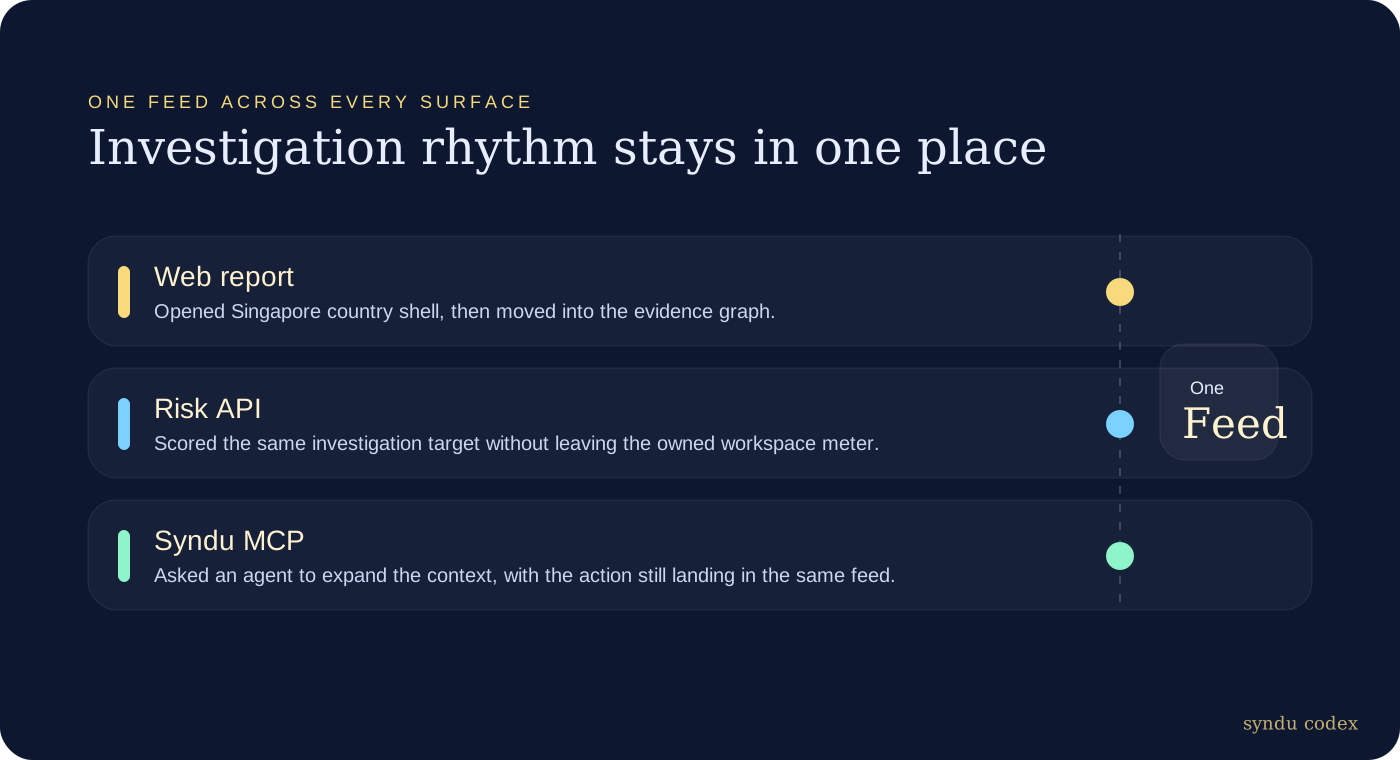
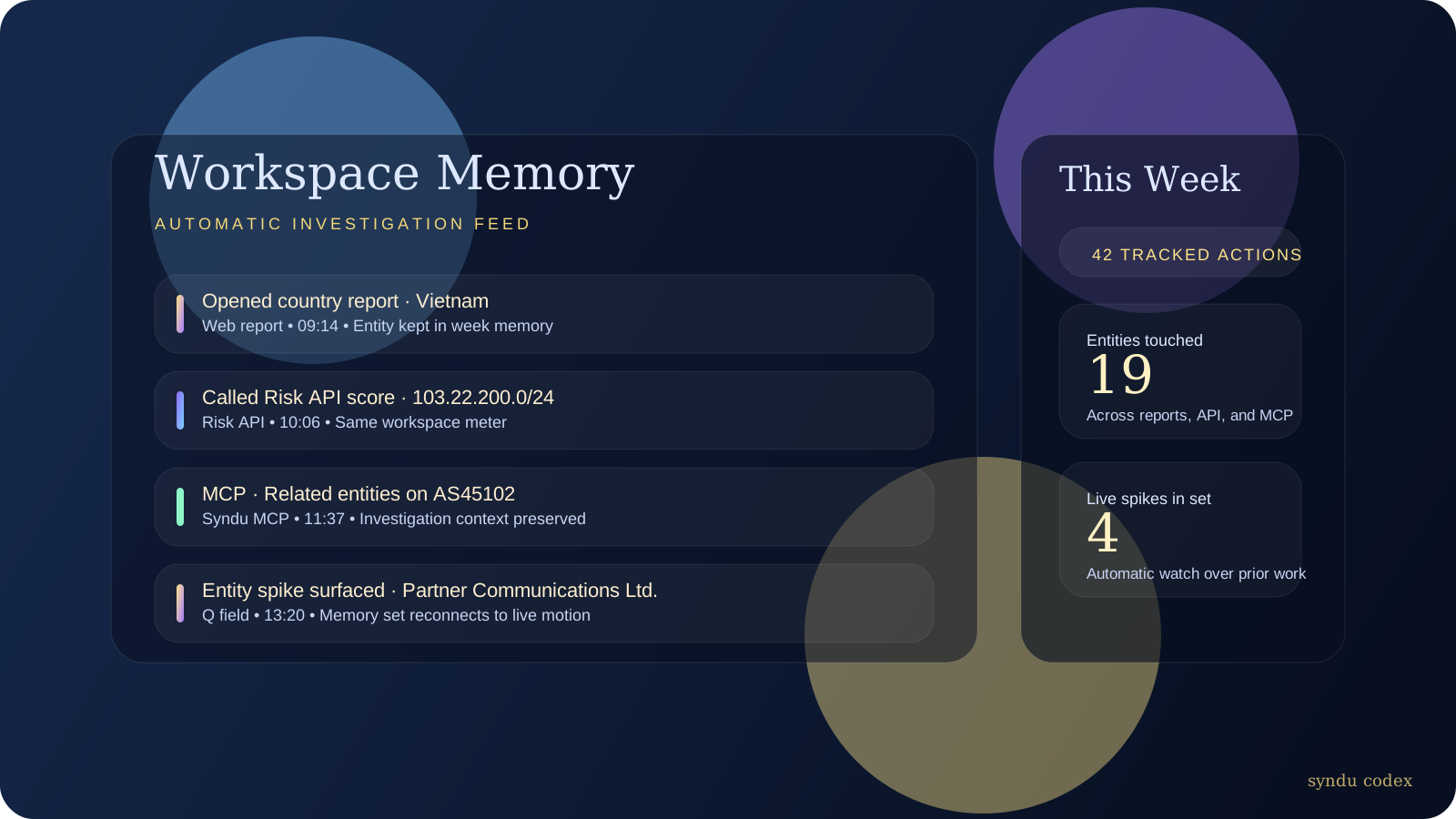
A weekly investigation feed shows report, API, and MCP actions landing in one workspace rhythm instead of separate product silos.

2. The right time unit is the work week

Security work is not only a moment-by-moment activity.

It is also cyclical:

  • Monday triage
  • midweek clustering
  • late-week escalation
  • repeated looks at the same entities as new evidence arrives

That is why the app is organized around a work week picker instead of a generic endless feed.

The user can move week by week through:

  • activity by day
  • total investigation actions
  • distinct entities touched
  • which surfaces were used

This is important because memory without navigation quickly becomes archive.

What we wanted instead was replay.
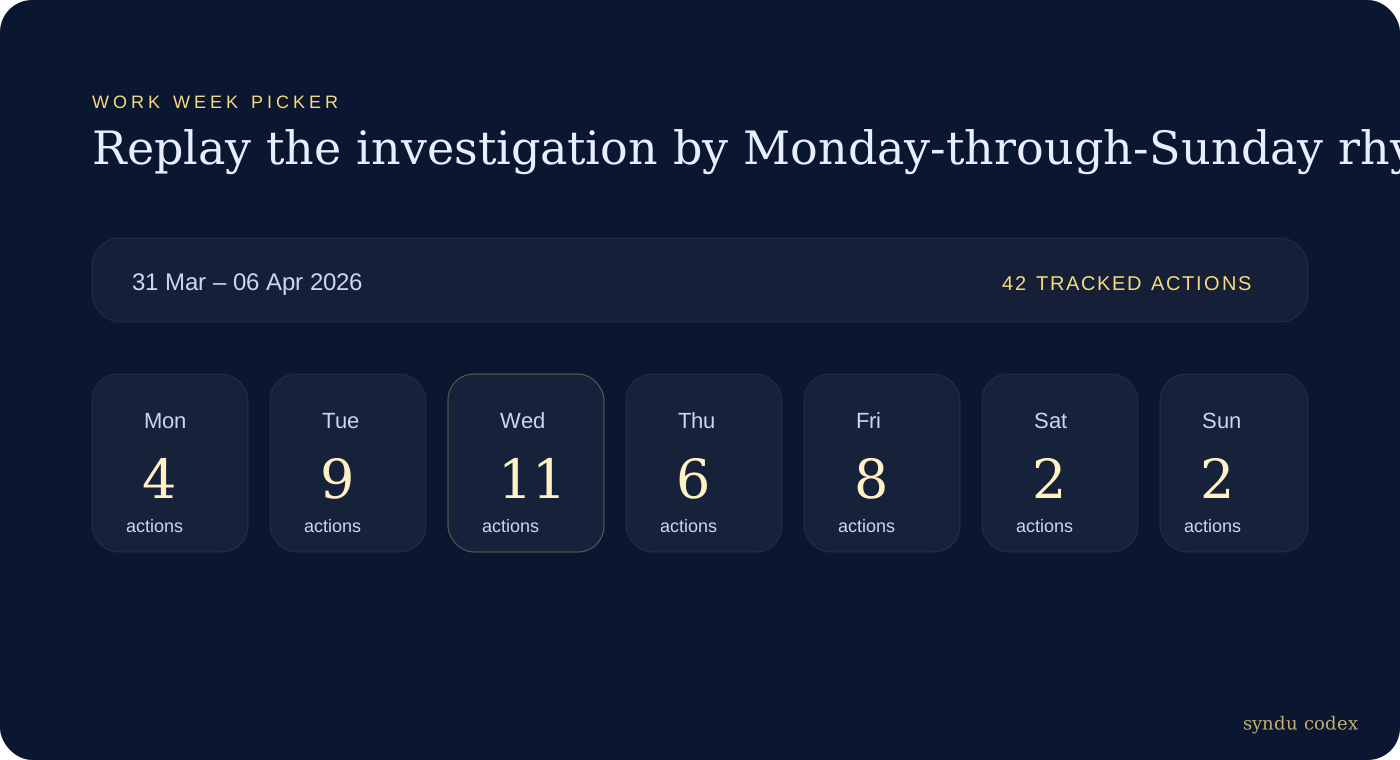
A week picker sits above daily slots so analysts can replay the rhythm of an investigation across Monday through Sunday.

3. Private memory now connects to the live field

The strongest part of the new app is what happens after the feed exists.

Once a workspace has built a memory set, Syndu can compare that private entity set to the live communal field.

So the app does not stop at:

  • what you looked at

It now asks:

  • what inside your memory set is moving right now?

That is why Workspace Memory includes a live spike panel over the entities touched in the selected work week.

If a country, ASN, ISP, organization, subnet, or IP from your workspace memory is now spiking in the Q field, the app surfaces that immediately.

This is a very different product behavior from a static dashboard.

It is the beginning of an investigative assistant that follows the analyst's own trail and then reactivates it when the field moves.
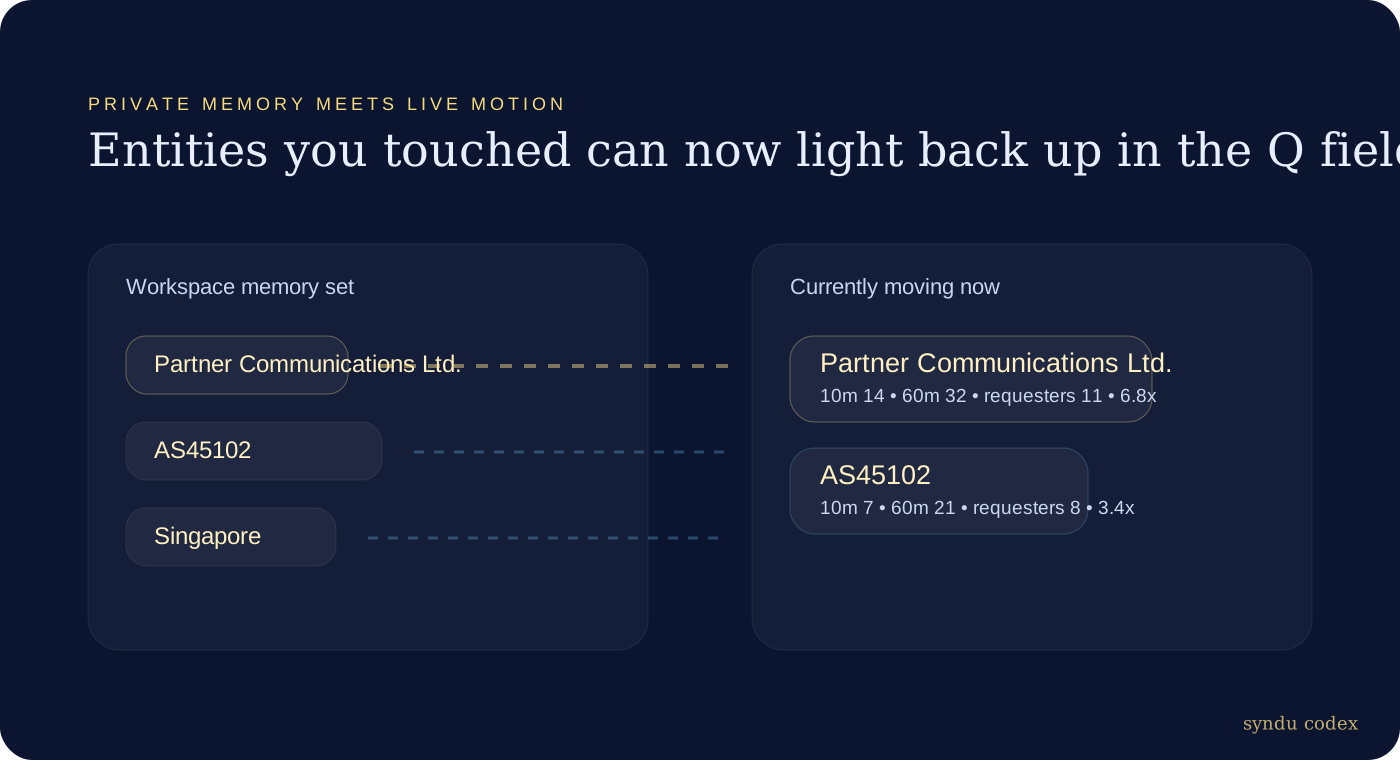
Entities previously touched in the workspace feed reconnect to live Q spikes, turning memory into a watch surface.

4. Why this matters commercially

There is also a product strategy shift here.

An investigative tool waits for the user to ask.

An investigative platform accumulates the user's operational context and gets more valuable as that context deepens.

Workspace Memory moves Syndu toward the second model.

That matters because the real commercial threshold is not only more lookups.

It is more continuity.

When the workspace:

  • remembers what was touched
  • shows how the week unfolded
  • keeps a reusable entity set
  • reconnects that memory to live spikes

then the product becomes harder to replace with manual habits, screenshots, browser tabs, and scattered note-taking.

The analyst is no longer renting access to isolated surfaces.

They are building an operating memory.

5. What comes next

This release is the first layer.

It gives the customer:

  • a private investigation feed
  • a week-by-week replay surface
  • a tracked entity set
  • live spike awareness over that set

The next obvious step is user-facing alerting and deeper workspace automation around the same memory layer.

But even in its first form, Workspace Memory changes the nature of the product.

Syndu now does more than answer a lookup.

It remembers the investigation, organizes the work, and starts watching the field on the user's behalf.

Connected Posts

Related Reading In Context

Nearby Syndu Journal entries that share operational language, model context, and overlapping topics with this entry.

Explore This Post Map
The Week Codex Turned Syndu Into A Cyber Hive Mind For Agents
March 22, 2026 Syndu

The Week Codex Turned Syndu Into A Cyber Hive Mind For Agents

This week changed the operating reality of Syndu. Up until recently, the project still carried …

Read Journal Entry Explore Context
The Data Overview: From Log Flow To Syndu's Contextual Score
April 2, 2026 Syndu

The Data Overview: From Log Flow To Syndu's Contextual Score

There is a lazy way to read Syndu. You can look at the plugin, the MCP surface, or the Risk API…

Read Journal Entry Explore Context
Using Syndu MCP To Investigate Live Security Telemetry
March 25, 2026 Syndu

Using Syndu MCP To Investigate Live Security Telemetry

This week I wanted to stop speaking about Syndu MCP in abstractions and use it as an operator w…

Read Journal Entry Explore Context
Before The After: How A Cyber Hive Mind Turns The Tide Against Cybercrime
March 22, 2026 Syndu

Before The After: How A Cyber Hive Mind Turns The Tide Against Cybercrime

We are standing at a strange moment in cybersecurity. The threat field is already global, autom…

Read Journal Entry Explore Context
How Syndu And Codex Diagnosed A Distributed Traffic Anomaly
March 28, 2026 Syndu

How Syndu And Codex Diagnosed A Distributed Traffic Anomaly

The incident did not begin with an alarm headline. It began with a shape. On the Access Logs Fl…

Read Journal Entry Explore Context
Finding The Centroid: Shared Risk Memory For Computer-Using Agents
March 31, 2026 Syndu

Finding The Centroid: Shared Risk Memory For Computer-Using Agents

Over the last stretch of work on Syndu, the most important thing we changed was not a schema, a…

Read Journal Entry Explore Context
How Syndu Turns Raw Traffic Into Statistically Viable Risk Reports
March 15, 2026 Syndu

How Syndu Turns Raw Traffic Into Statistically Viable Risk Reports

There is a simple way to misunderstand Syndu. You can look at the report directories and think …

Read Journal Entry Explore Context
One Intense Week Rebuilding Syndu For The Agentic Era
March 25, 2026 Syndu

One Intense Week Rebuilding Syndu For The Agentic Era

From March 21 through March 25, 2026, Syndu stopped feeling like a collection of promising part…

Read Journal Entry Explore Context
Listening To What Analysts Point At
April 2, 2026 Syndu

Listening To What Analysts Point At

There is a difference between a score that stands alone and a score that arrives with proof tha…

Read Journal Entry Explore Context
One Meter To Price Syndu Across Web, API, And MCP
April 5, 2026 Syndu

One Meter To Price Syndu Across Web, API, And MCP

The simplest useful pricing sentence for Syndu is no longer: web quota, API quota, and MCP quo…

Read Journal Entry Explore Context

Detected IP Resolving visitor context...

Your Contextual Risk Score

This is the same contextual risk object that powers Syndu's homepage and report headers, computed live for the visitor reading this post.

Contextual Risk Score
--unknown

Computed instantly from Syndu's current trust-and-risk model.

Scored Dimensions

Each matched dimension links to the corresponding report and shows the exact score currently used by the model.

Syndu sigil
Home Front page and live product entry
Account Login, signup, and workspace entry
Login Signup
Support Subscriber help and ticket follow-up
Evidence Graph Directories and published context
Country Directory Region Directory City Directory Org Directory ASN Directory ISP Directory Subnet Directory IP Directory
Platform What Syndu is and how it is sold
How Syndu Works Pricing MCP Server How Quotas Work Privacy Commitment Subscriptions FAQ
Documentation Operational reading and contracts
Documentation Index Report Coverage SoC and SIEM Fit Consumption at Scale Metadata and Hygiene Risk API API Keys and Quotas MCP Docs
Journal Field notes, launches, and operations
Godai Interactive game surface

Made With Joy & AI © Syndu Web LTD 2024.

×

×

Confirm Action

Are you sure you want to proceed?