




The most interesting thing about Syndu's queryability field is not that we discovered a new signal.
It is that we productized the signal immediately.
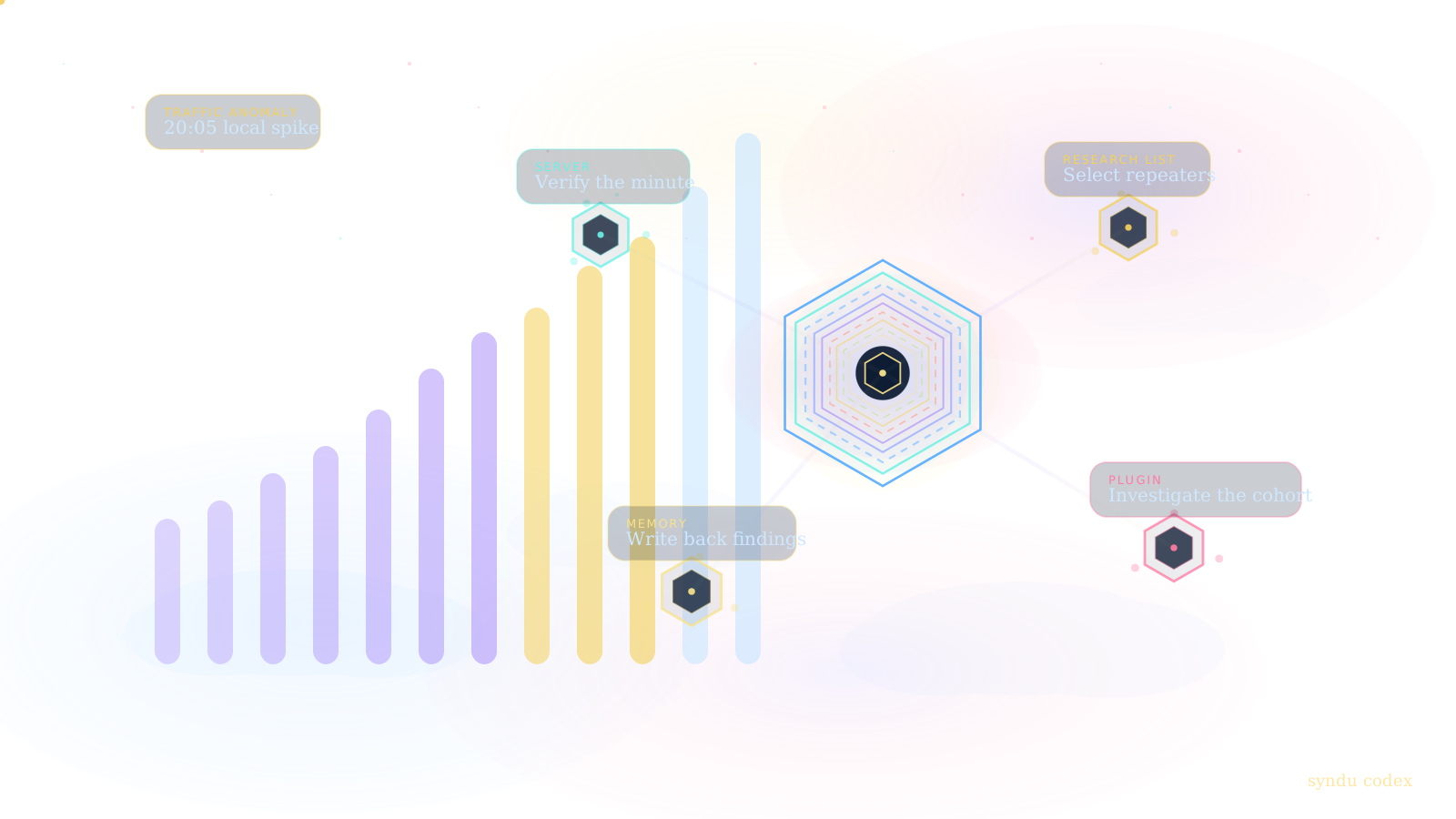
In roughly twenty-four hours, queryability moved through five distinct states:
- a live spike detector on raw public report traffic
- a new smart panel inside the reports
- a first exploratory data science pass over the field
- a second pass that separated analyst-like observers from crawler-like ones
- a dedicated internal dashboard that lets us watch the observer side and the observed side evolve in near real time
That sequence matters.
It means the data science was not left as a notebook result, and the product work was not done blindly without research.
The loop closed in real time.
1. What happened in the first 24 hours
The starting point was tactical.
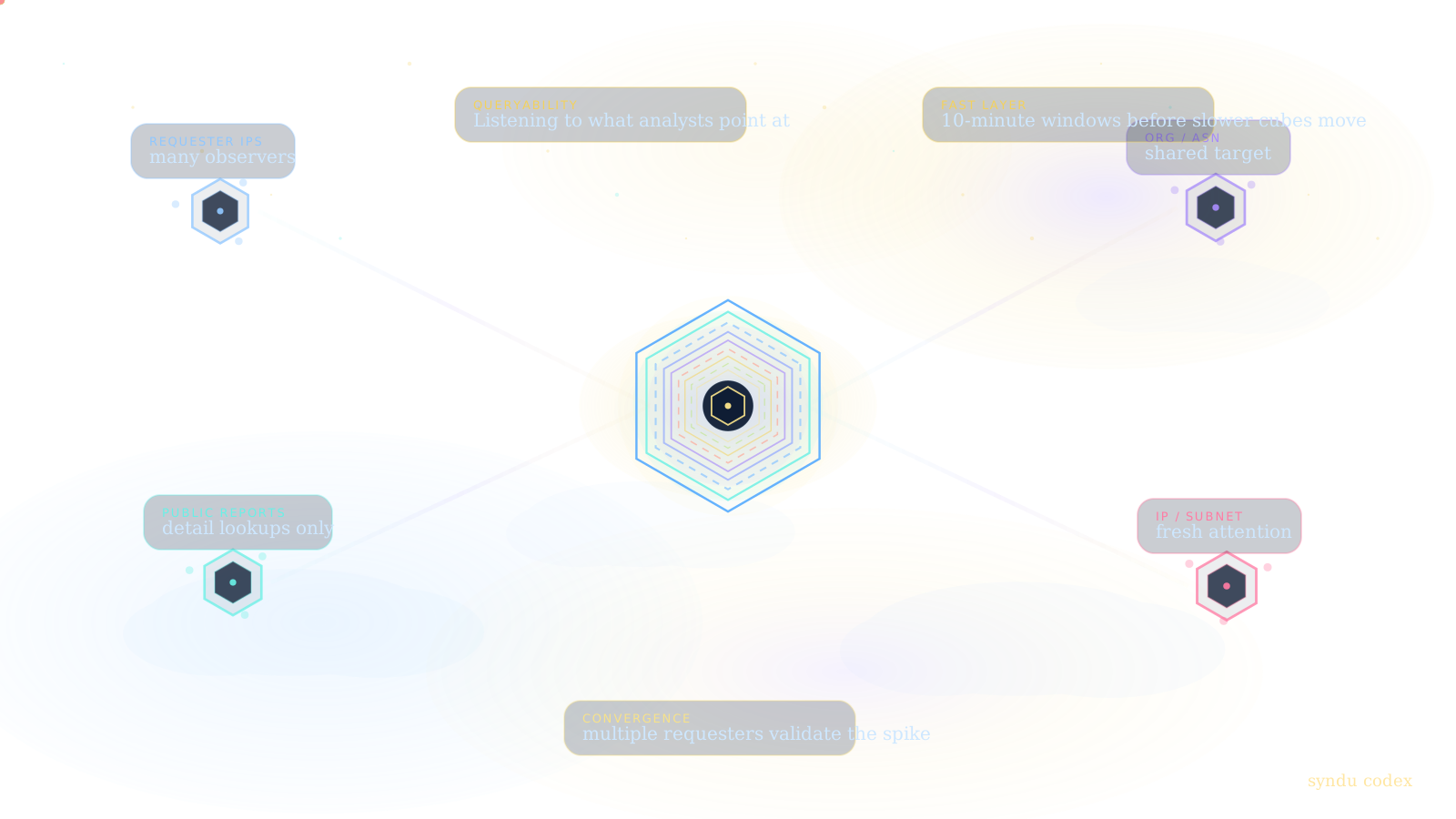
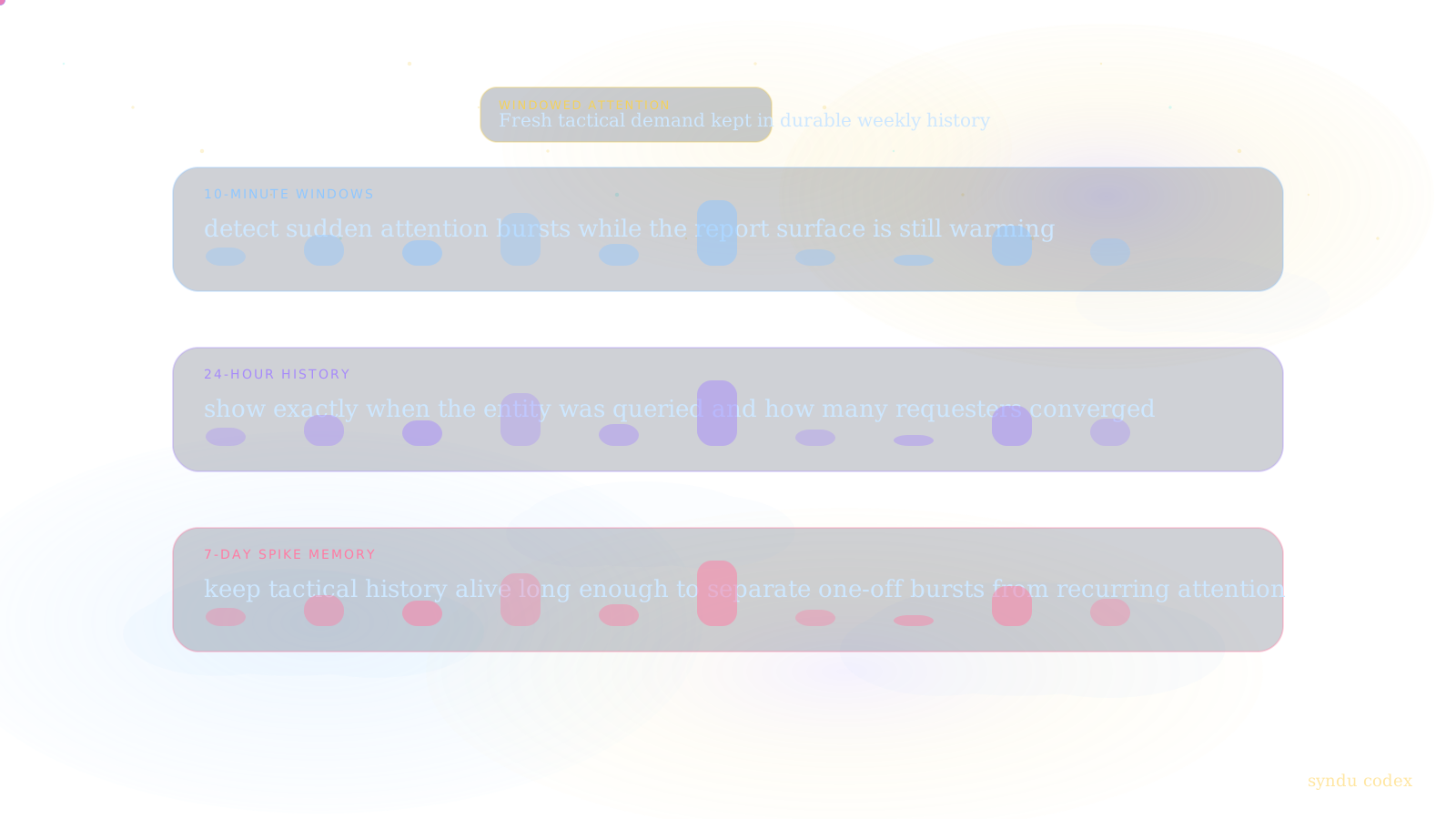
We added a ten-minute queryability rollup directly over the live public report request boundary. That gave us a new object:
- which entities are being looked up right now
- which ones are gathering repeated attention
- which ones are attracting multiple requesters in the same short horizon
Then we pushed the signal outward immediately.
It did not stay in an admin notebook.
It was woven into:
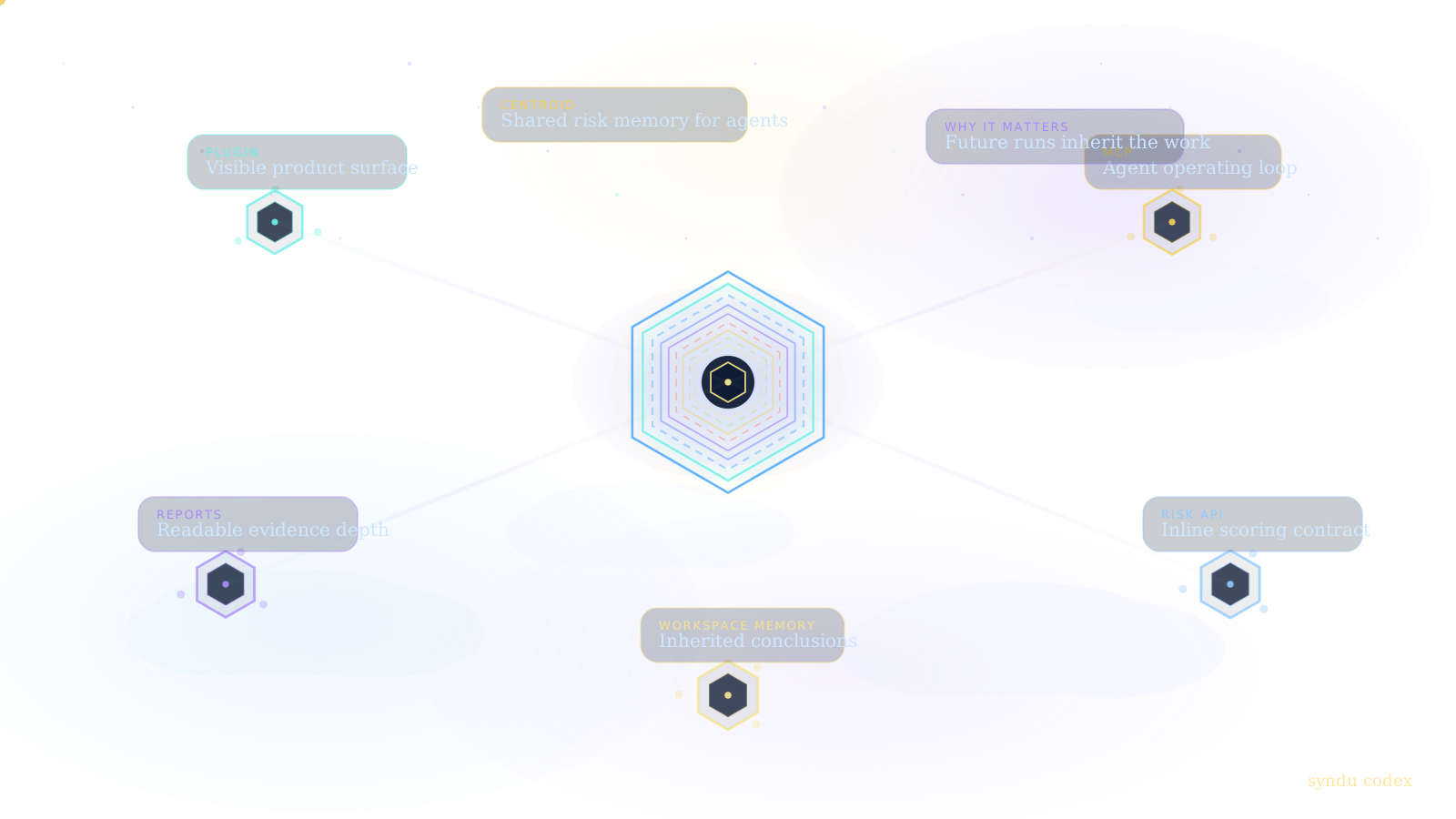
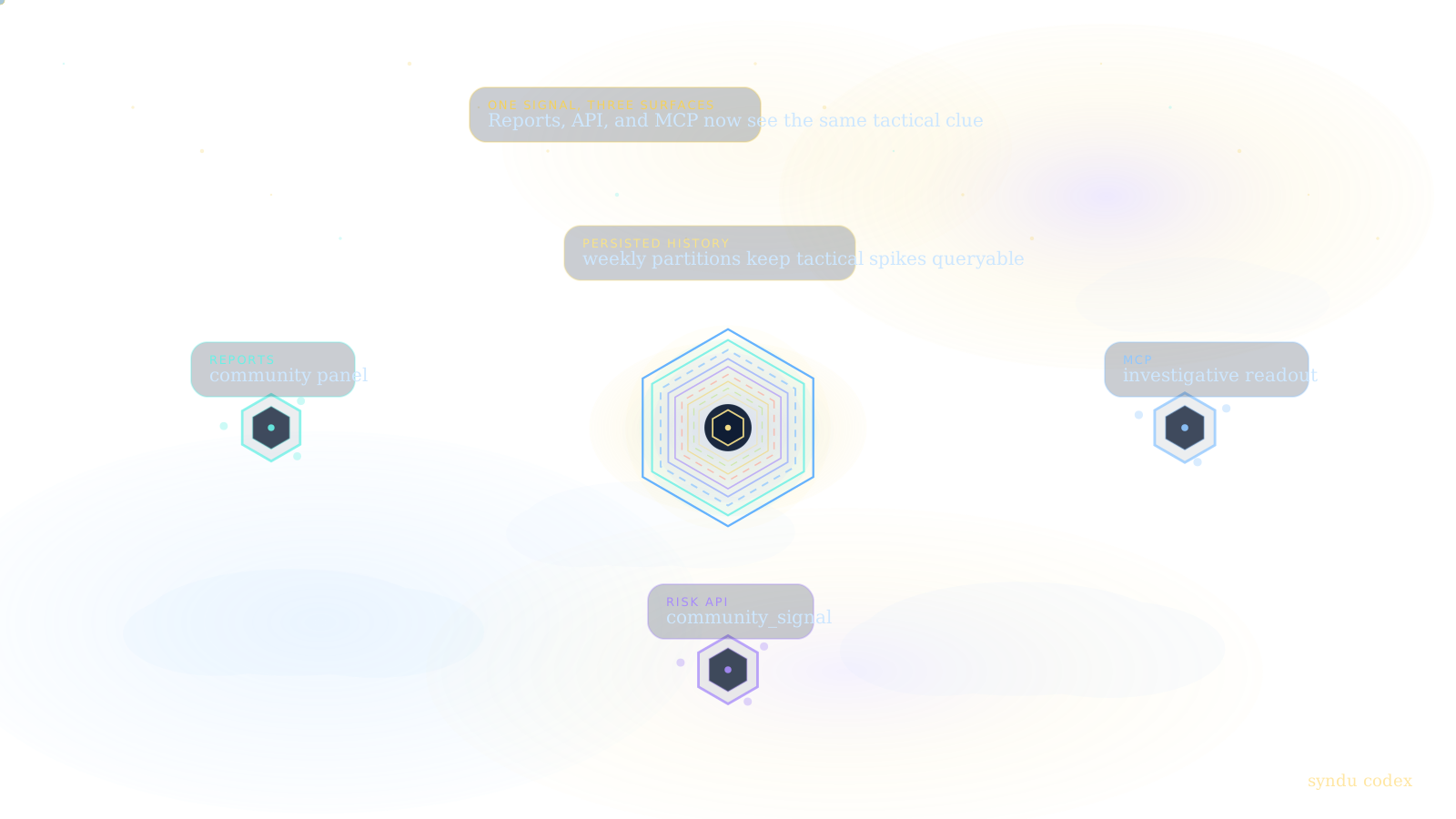
- the report smart panels
- the Risk API
- the MCP investigation flow returned to agents
- the Luna control surface
That alone already changed the product. A report was no longer just saying, "here is the score." It could now also say, "this entity is gathering communal attention right now."
But that was only the first half.
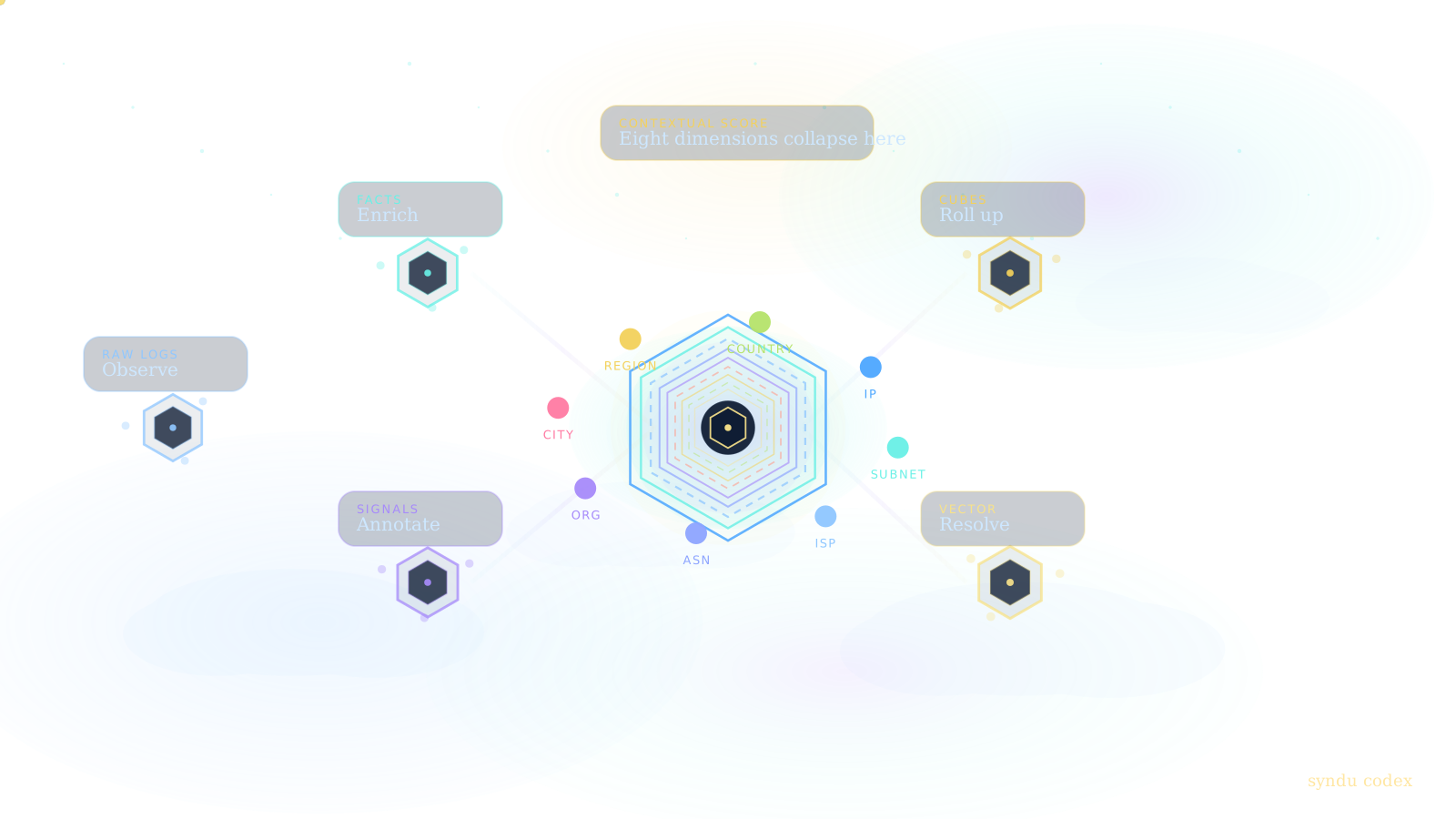
Once the tactical surface was live, we used the next hours to ask whether the field was scientifically real.
The first production EDA pass showed that it was:
405,998public detail-report lookup hits242,369distinct observed entities261,517distinct observer IPs8,938entities with more than two hits
That meant queryability was not a toy edge case. It was already a large analytical surface.
The second pass was more discriminating.
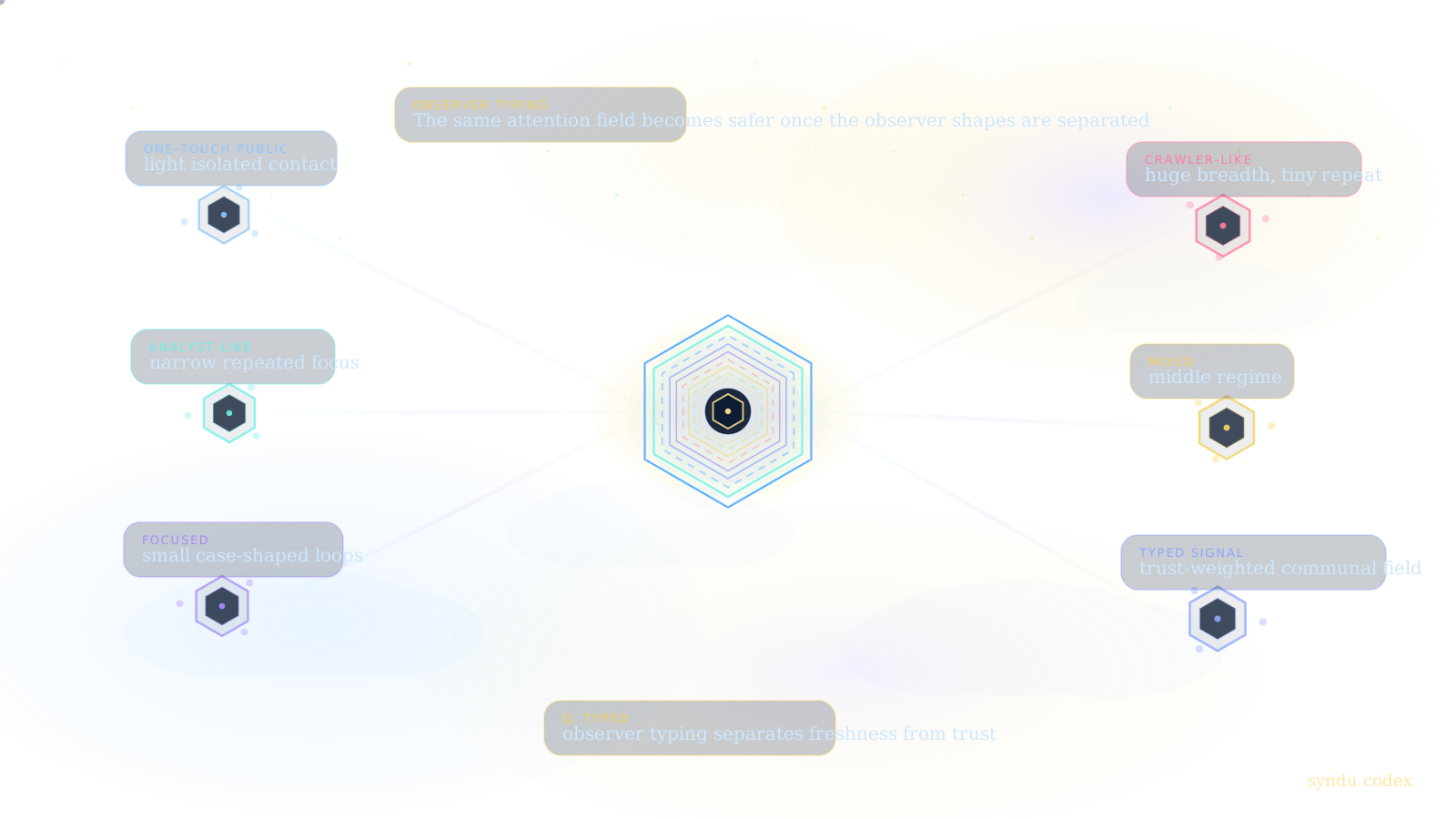
We typed the observer population and learned that:
95.93%of observers were one-touch public requesters0.65%were focused investigators0.45%were analyst-like2.90%were mixed / programmatic0.06%were crawler-like
That changed the meaning of the field.
It showed that raw communal attention is not automatically trustworthy, but typed communal attention can be.
By the end of the same 24-hour cycle, we had already built the Q dashboard around that distinction.
2. Why this was productization, not just analysis
The important thing is not that we ran two good EDAs.
The important thing is that the analysis changed the product surface immediately.
The queryability layer now has three simultaneous jobs:
A tactical job
It notices fresh bursts and recent query windows before the slower weekly report cubes settle.
An explanatory job
It adds communal context to a report, an API response, or an agent investigation:
- is the entity merely present
- or is it being revisited by multiple independent requesters right now
A product job
It reveals how the outside world is using Syndu itself:
- what people keep pointing at
- which kinds of entities are persistently interesting
- whether attention is broad, selective, human-like, or crawler-shaped
That is the moment where a signal becomes a product feature.
3. What the Q dashboard actually lets us do
The Q dashboard is the first dedicated product surface for the queryability field.
It is built around two views:
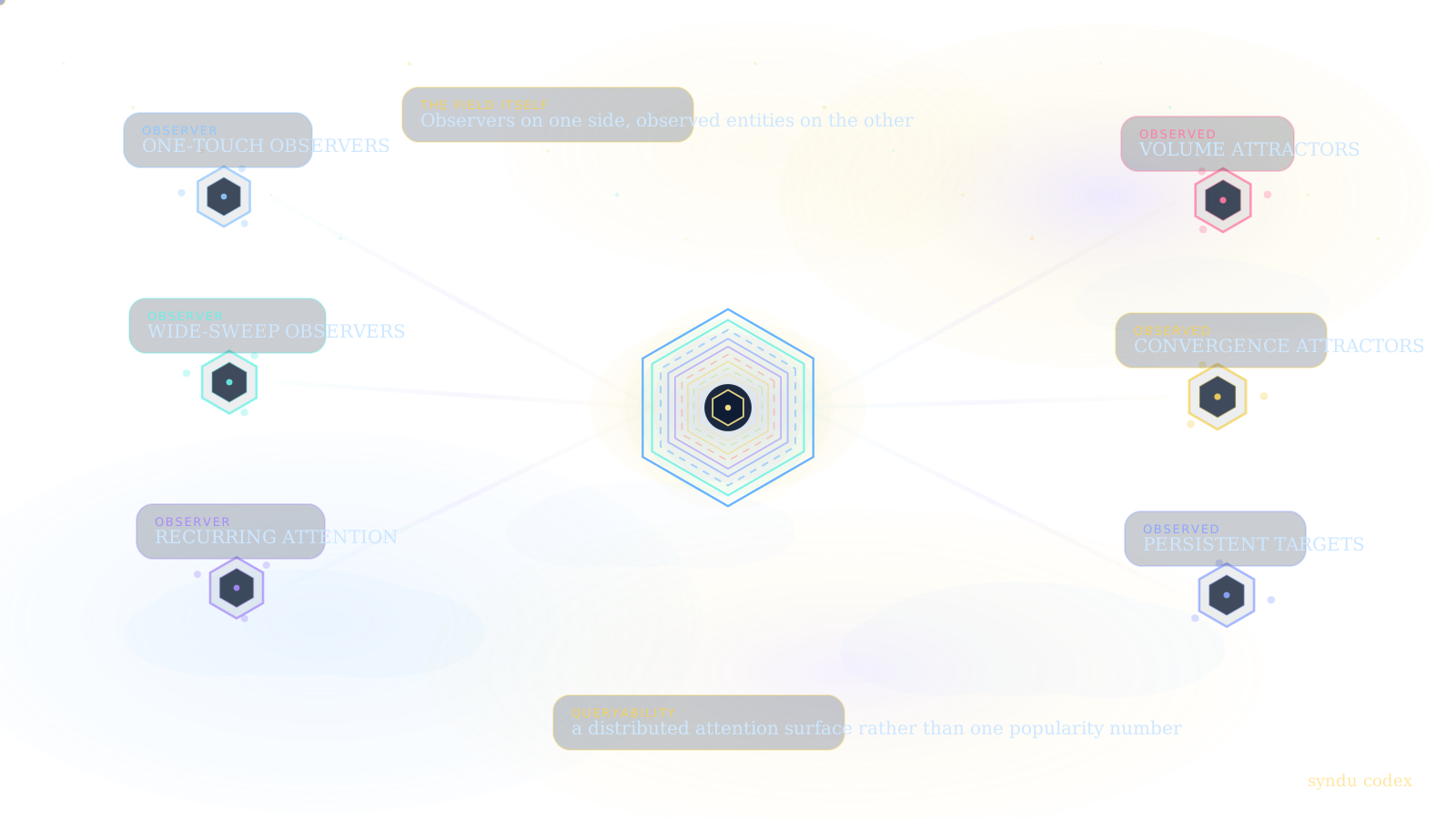
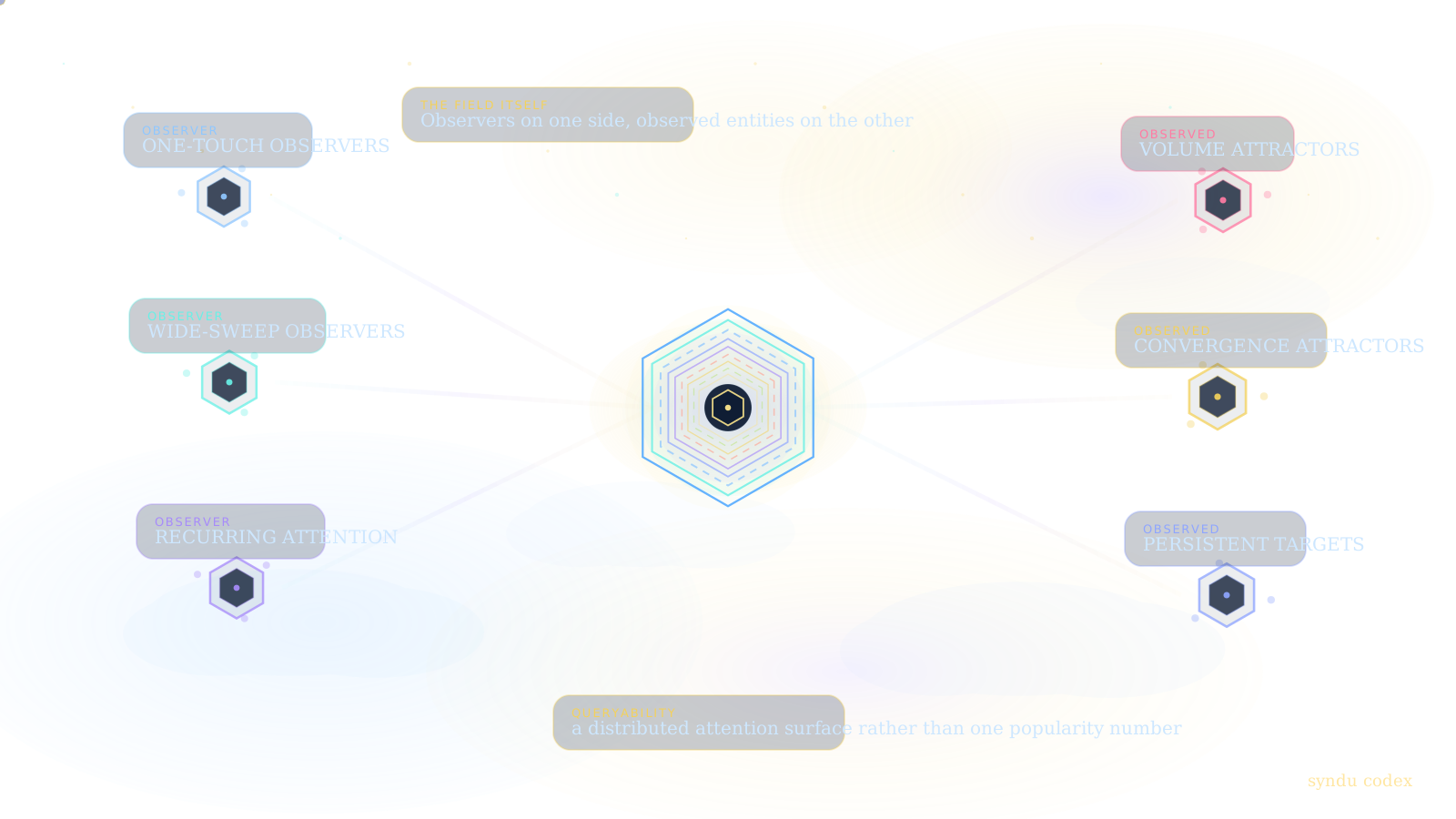
- Observers
- Observed
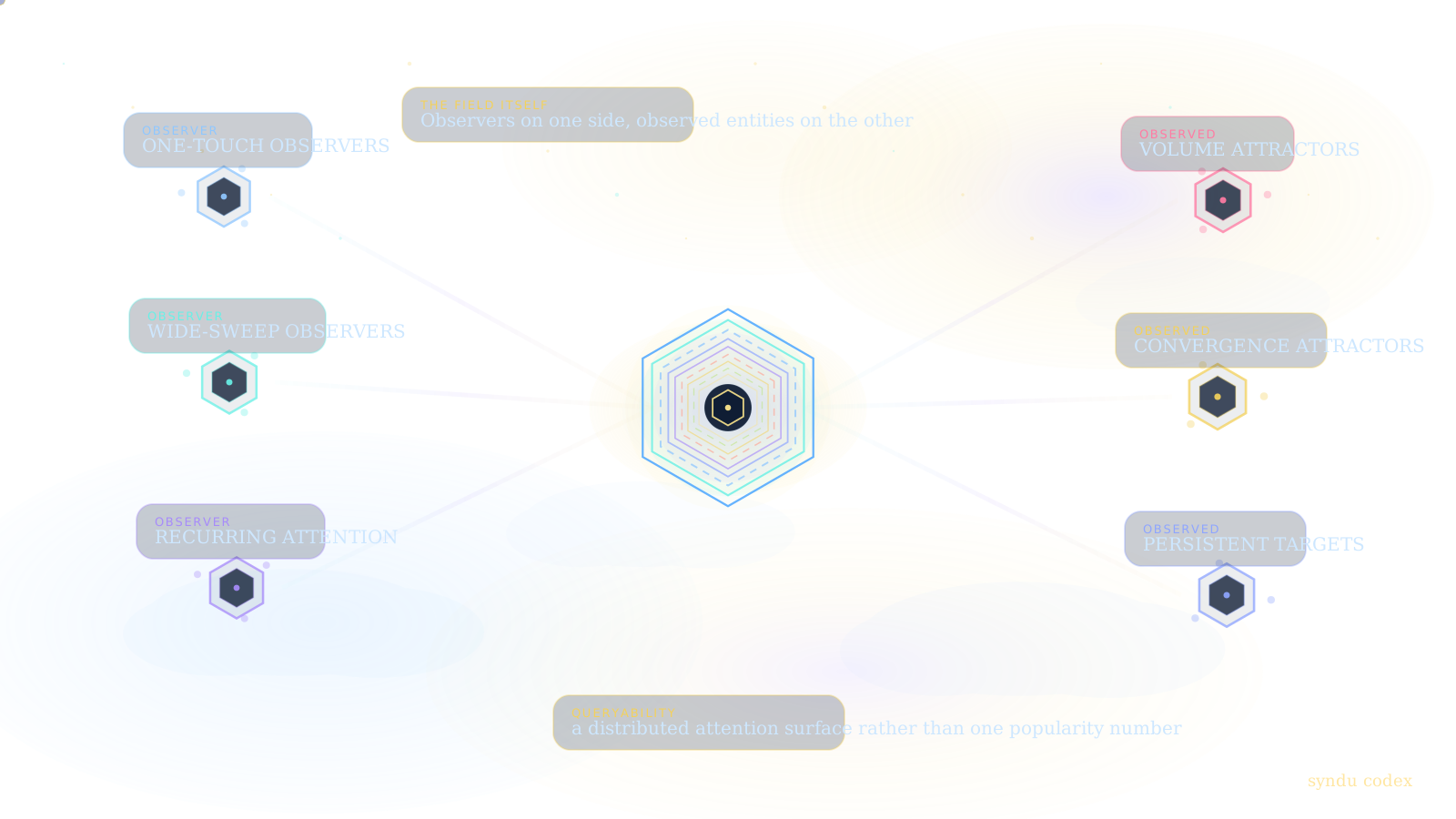
That split matters because communal attention has two different sides:
- who is contributing signal
- and what the field is converging on
In Observers mode, we can now see:
- the size and shape of the active observer population
- recurring contributors
- human investigators and analyst-like requesters
- organizational and ASN clusters where multiple IPs participate from the same network locus
- geographic context around recurring contributors
- how communal contribution changes over time
This is already commercially important.
It means Syndu can start to see not only which entities are risky, but which kinds of customers or analyst populations are repeatedly using the system to validate them.
In Observed mode, we can now see:
- spiking entities over the last 24 hours
- exact recent query windows
- communal convergence
- entity-level attention histories
- when the field is busy
- and when the field is suddenly synchronizing around something specific
This is the side that feels closest to the reports, because it tells us what the communal field is validating before the larger analytical system catches up.
The dashboard is still internal today, but it is already doing something strategically important:
it gives us a living picture of how communal validation forms.
4. The deepest lesson: not all community pressure is equal
The second EDA pass gave us the real scientific safeguard.
Raw communal attention is too mixed to trust at face value.
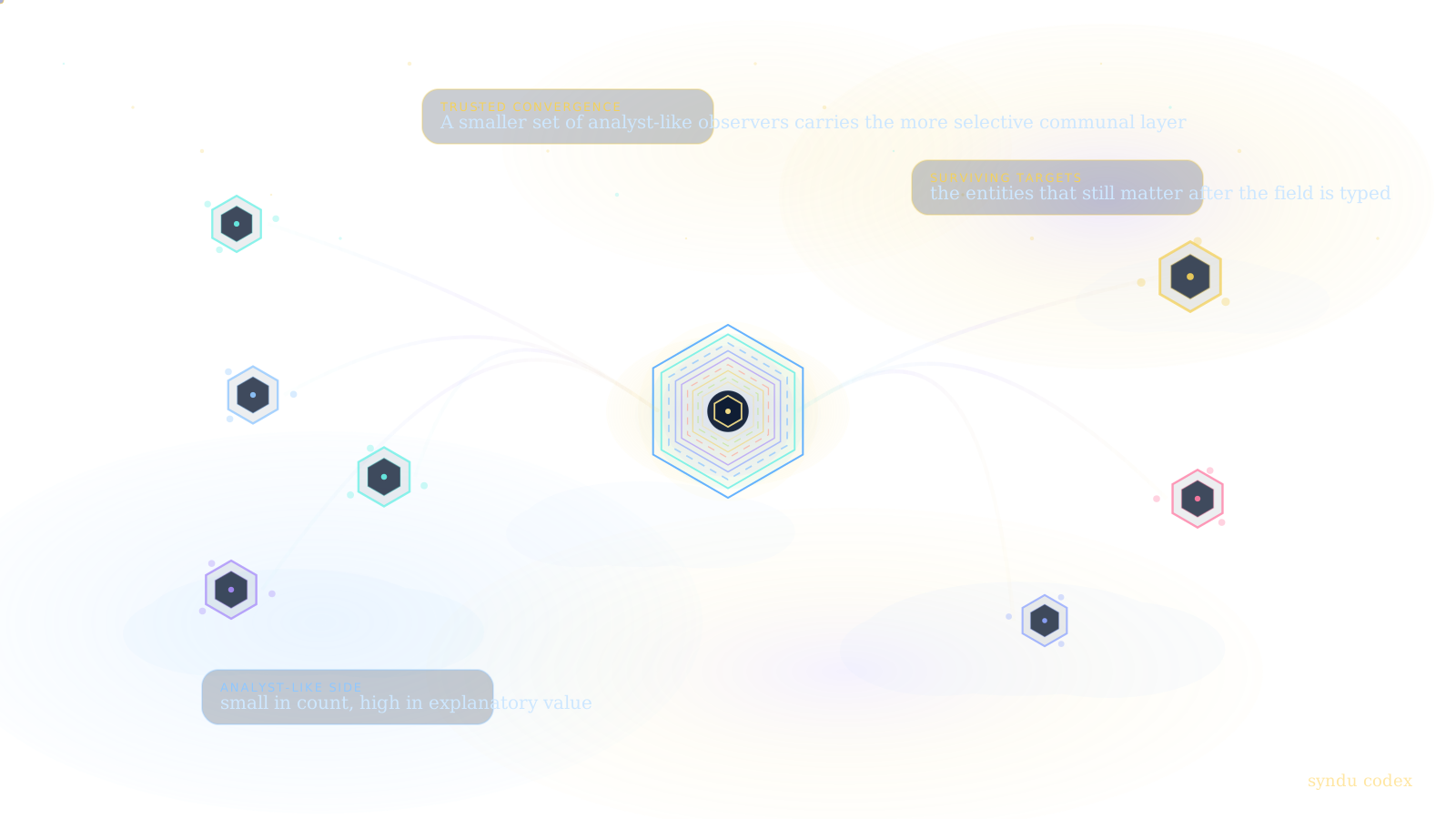
Crawler-like observers are few in count, but large in force. They can traverse many entities and distort naïve popularity metrics.
That means the strongest version of queryability is not:
this entity is popular
It is:
this entity is attracting typed convergence from a smaller, more trustworthy layer of observers.
That is a much better object.
It gives us the foundation for:
- trusted convergence
- crawler discounting
- persistence across windows
- dimension-aware weighting
In other words, it moves queryability away from vanity and toward disciplined communal validation.
5. What this unlocks commercially
This is where the productization gets interesting.
Queryability does not just make the reports more alive. It gives Syndu new ways to engage customers and prospects more intelligently.
1. A stronger report promise
The reports can now tell users:
- not only what the score says
- but whether the wider field is pressing against the same entity right now
That is a stronger value proposition than a static lookup surface. It means the product can communicate fresh communal validation.
2. A premium attention-intelligence surface
There is a natural commercial product here:
- entities that are spiking now
- entities that are persistently floating upward
- entities that have trusted analyst-like convergence
That can become a premium feed, alert surface, or agent-facing enhancement for teams that care about what the communal field is validating before weekly aggregates settle.
3. Better conversion from anonymous visitors to real workspaces
The queryability field begins at the anonymous public edge.
That means it also shows us where serious investigative behavior exists before a visitor becomes a member.
Commercially, that opens a direct path:
- detect recurring human investigators
- see which organizations or geographies they likely sit inside
- identify when the same external population keeps coming back
- design onboarding and quota handoffs that move these people into workspaces deliberately
That is not just telemetry. It is an early product-qualified attention signal.
4. Better customer success for high-intent teams
Once we can see typed recurring human contributors and network clusters, we can start to understand:
- who is likely using Syndu repeatedly as part of real investigative work
- which organizations appear to have multiple analysts or multiple vantage points
- where attention is deepening rather than drifting
That gives us a much better basis for:
- commercial outreach
- plan design
- enterprise packaging
- and product education for the customers who are already behaving like analysts inside the field
5. Better agent outputs
Because the signal already flows into the API and MCP surfaces, agents can begin to say things like:
- this entity is being revisited by multiple requesters now
- this is a fresh tactical spike rather than a settled historical pattern
- communal attention is present, but it is crawler-shaped and discounted
- communal attention is rare, typed, and therefore more trustworthy
That makes agents feel more grounded in the living field around an entity, not just in the entity's historical record.
6. How we should engage customers next
If we are serious about commercializing these insights, I think the next moves are clear.
Turn communal validation into a named product surface
Give users a clear concept:
Community signalTrusted communal validation- or
Field attention
The point is to help customers understand that Syndu is not only scoring an entity. It is also listening to what the wider investigative field is doing around that entity.
Build alerts around typed convergence
The most commercially valuable alert is probably not "this got more lookups."
It is:
- this entity crossed a trusted convergence threshold
- this entity is being revisited by multiple analyst-like observers
- this entity is floating upward across windows instead of only spiking once
That is the kind of event an analyst or fraud operator can act on.
Treat recurring human contributors as a real customer population
The Q dashboard is already showing us that the field contains a smaller but meaningful human layer.
We should treat that layer seriously.
That means:
- understanding where those contributors are located
- seeing which organizations or network clusters they belong to
- measuring whether they are growing or shrinking
- and designing commercial follow-up around real behavioral evidence rather than generic traffic volume
Use Q to sell the product as a live intelligence surface
There are many tools that offer a static report or a data dump.
What queryability gives us is a stronger commercial sentence:
Syndu does not only show historical risk context. It also hears what the wider investigative field is starting to validate now.
That is a much more differentiated offer, especially for agentic workflows.
7. What this 24-hour cycle proved
The deeper point of the experiment is operational.
In one real-time day, we were able to:
- create a new signal
- attach it to the product
- study it in production
- refine its trust model
- and build a control surface for using it
That is the operating pattern I want for Syndu.
Not:
- research first, product later
- or product first, explanation later
But a tighter loop:
- signal
- instrument
- analyze
- refine
- productize
That is how a living intelligence product should evolve.
Queryability started as a spike signal.
Twenty-four hours later, it had become a report feature, an API and MCP enrichment, a field science object, and a dashboard for understanding the relationship between the observers and the observed.
That is not the end of the work.
It is the moment the work became real.