




The simplest useful pricing sentence for Syndu is no longer:
web quota, API quota, and MCP quota
It is:
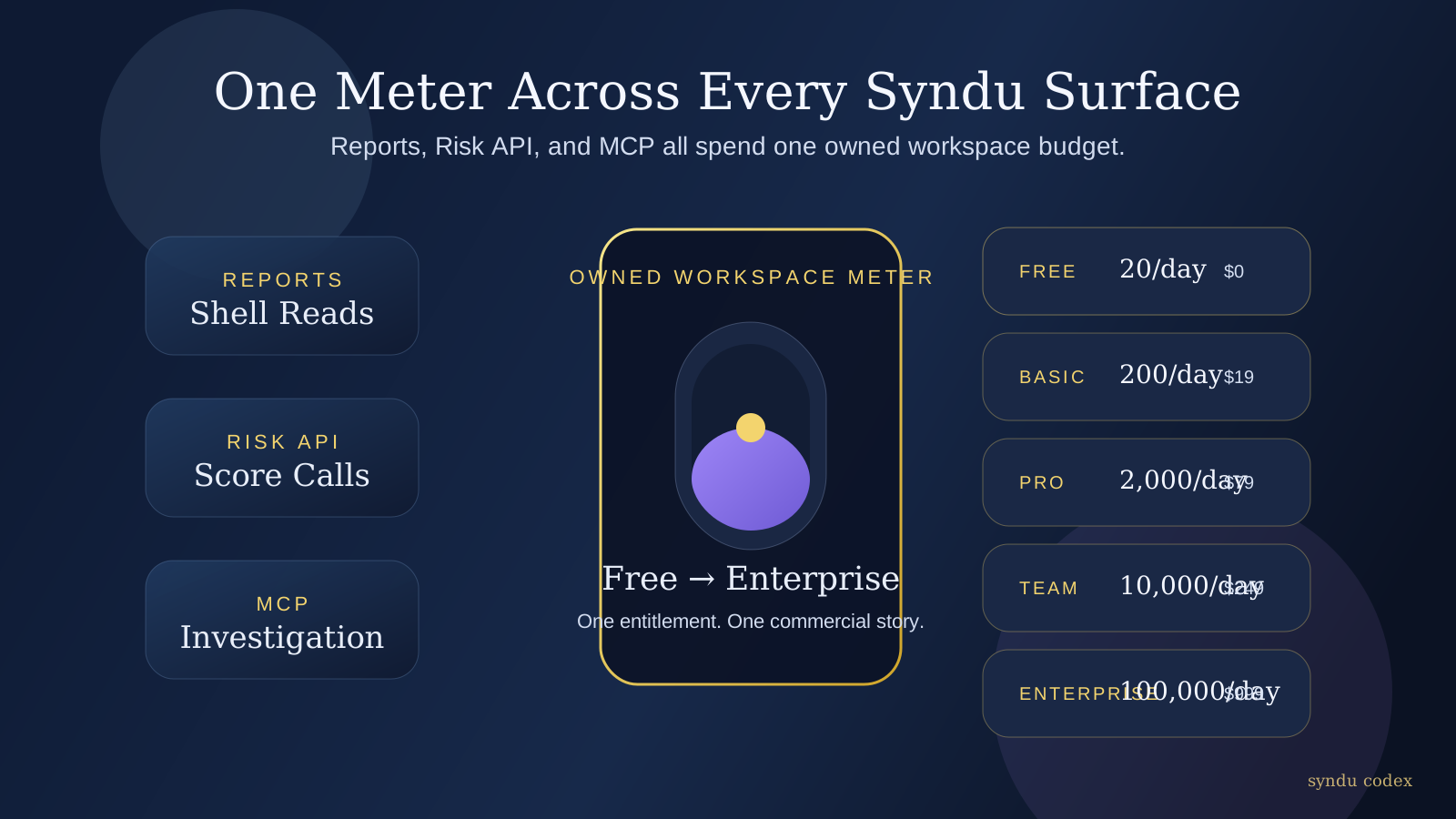
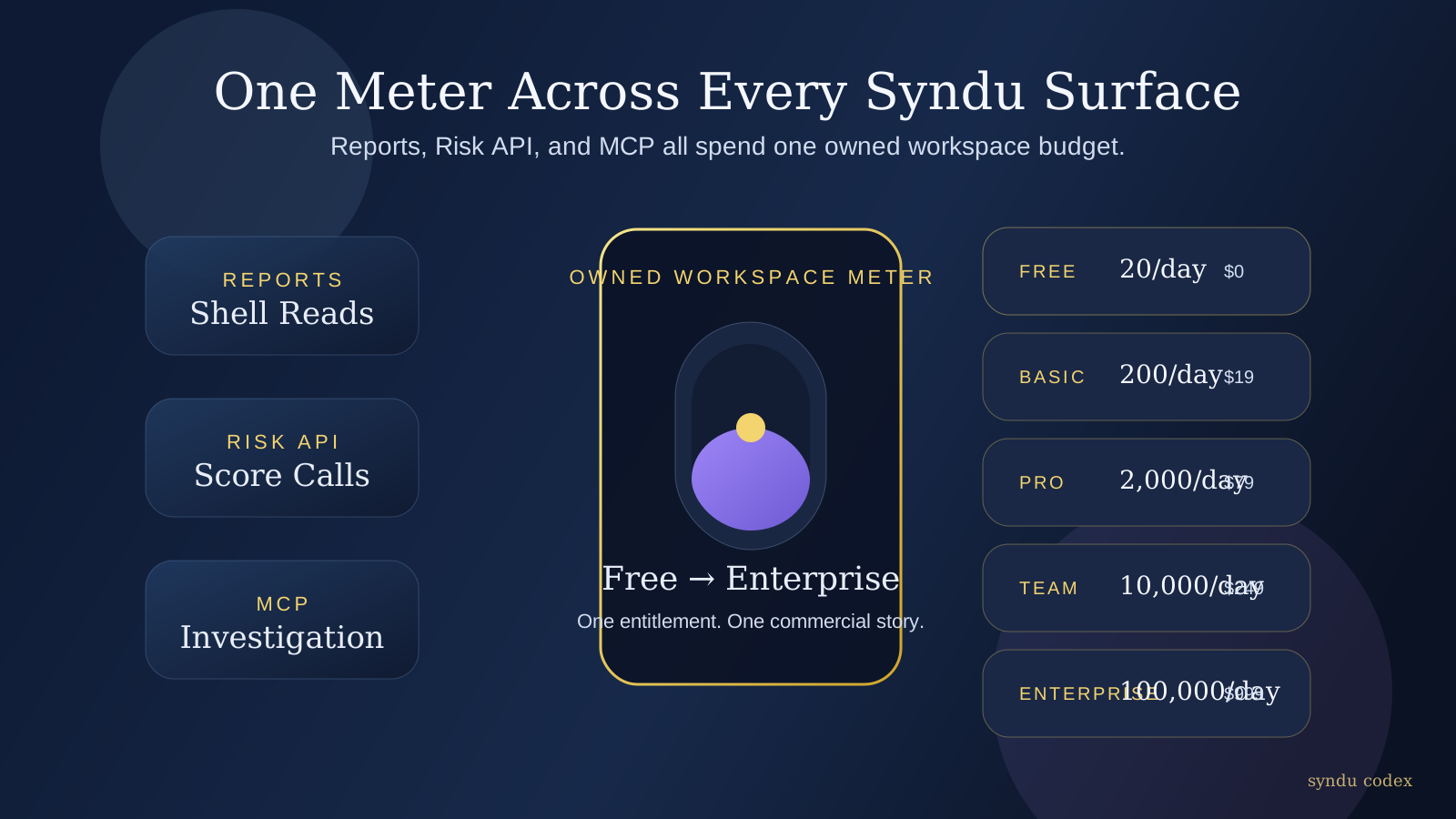
one owned daily meter across reports, Risk API score calls, and metered MCP investigation
That change is not cosmetic. It comes directly out of the production field.
Over the last thirty days, I looked at the live server data to see how real human requesters use the web surface, how often they hit soft throttles, and where commercial pressure actually begins. The result was clear:
- the old free web posture was too generous to convert
- the market does not experience Syndu as three separate products
- the real upgrade event is not “one more browser query”
- it is a workspace becoming operational across humans, automation, and agents
So the pricing model had to become simpler and truer at the same time.
1. The production field told us the free surface was doing too much
The strongest number in the server study was not a conversion number.
It was a behavior number:
29,773human-typed requesters across the trailing month16,693human requester-days- p99 monthly total for a human-typed requester:
5
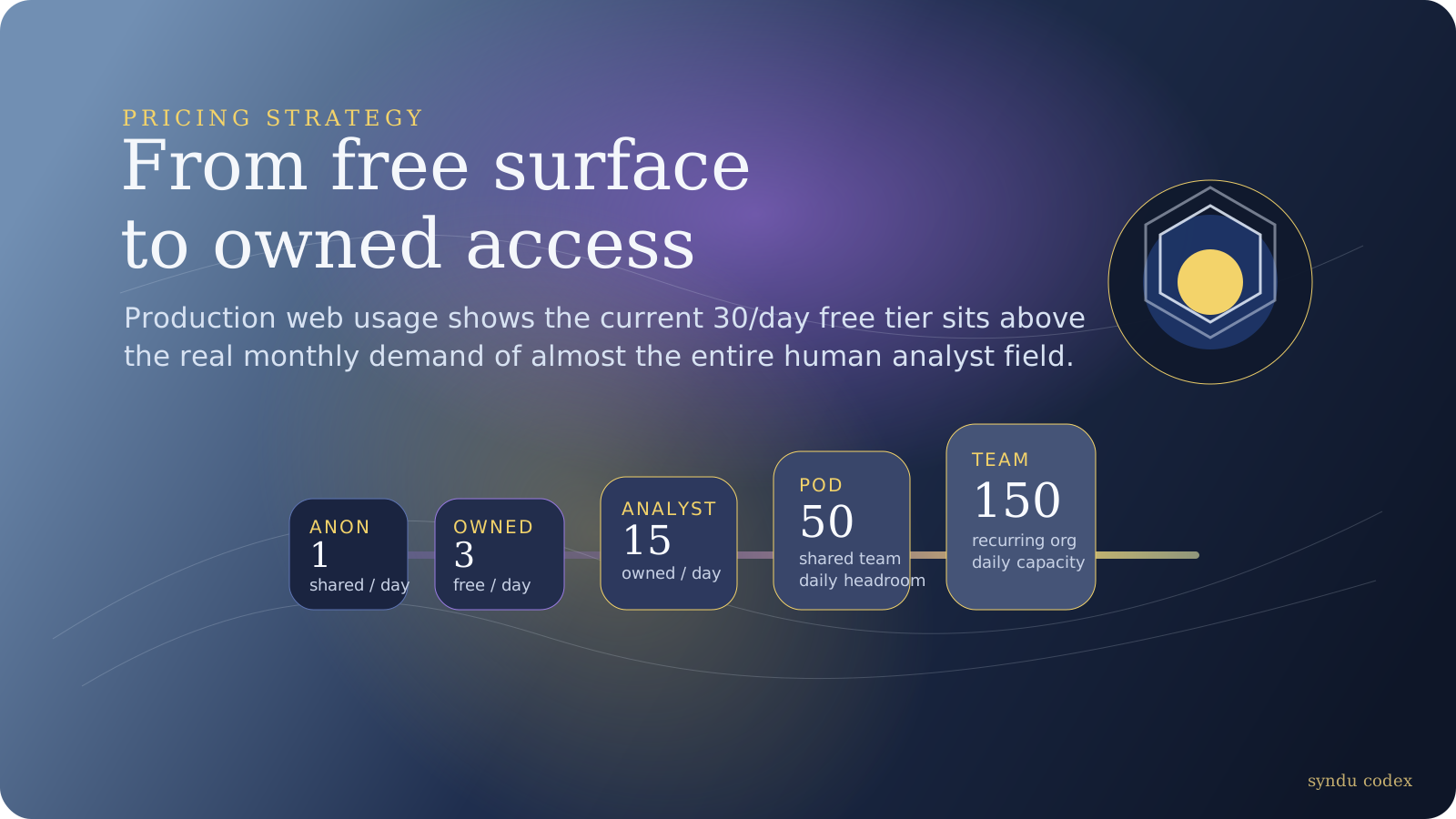
That means the earlier 30/day free web posture was not functioning like a teaser. It was functioning like a full working product for almost the entire observed field.
At the same time, the field was clearly pressing against the boundary:
76.87%of human-typed requesters encountered at least one redirect day91.39%of human requester-days encountered redirects
So the problem was not lack of demand.
The problem was that the product was applying pressure without presenting a clean commercial handoff.
2. Customers do not think in surfaces
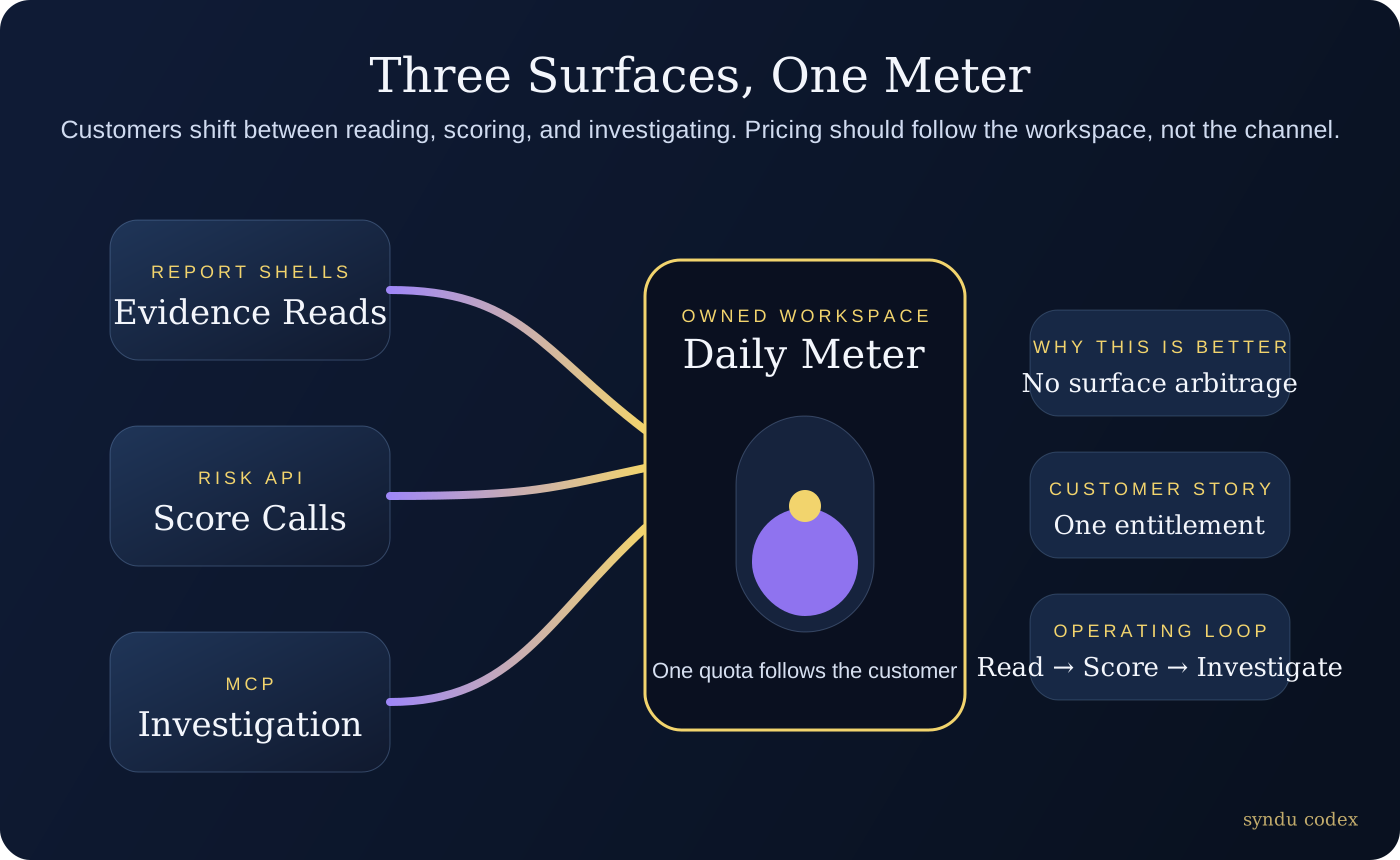
Internally, we have reasons to distinguish report shells, API score calls, and MCP investigation.
Customers do not care about that distinction nearly as much as we do.
What they experience is much simpler:
- sometimes they read a report shell
- sometimes they call the API
- sometimes they ask an agent to investigate through MCP
To the customer, those are not three subscriptions.
They are three ways of spending the same investigative attention.
That is why the next version of the commercial model had to become:
- one workspace
- one entitlement
- one daily meter
The surface can still change. The meter should not.
3. Why the free tier is now 20
The web-only study argued for a much tighter owned free posture than 30/day.
That insight remains correct.
But once the product is priced as a combined workspace meter, the free tier has a different job.
It must cover:
- light report reading
- occasional Risk API scoring
- light MCP investigation
for one serious evaluator inside one owned workspace.
That is why the new free tier becomes:
Free:20/day
This is still far tighter than the old posture in commercial terms, because the daily budget now follows the customer across all three surfaces instead of giving them three semi-separate free experiences to hide inside.
It is also honest.
It gives one person enough room to understand the product seriously, while still making sustained operational use visible.
4. The new ladder
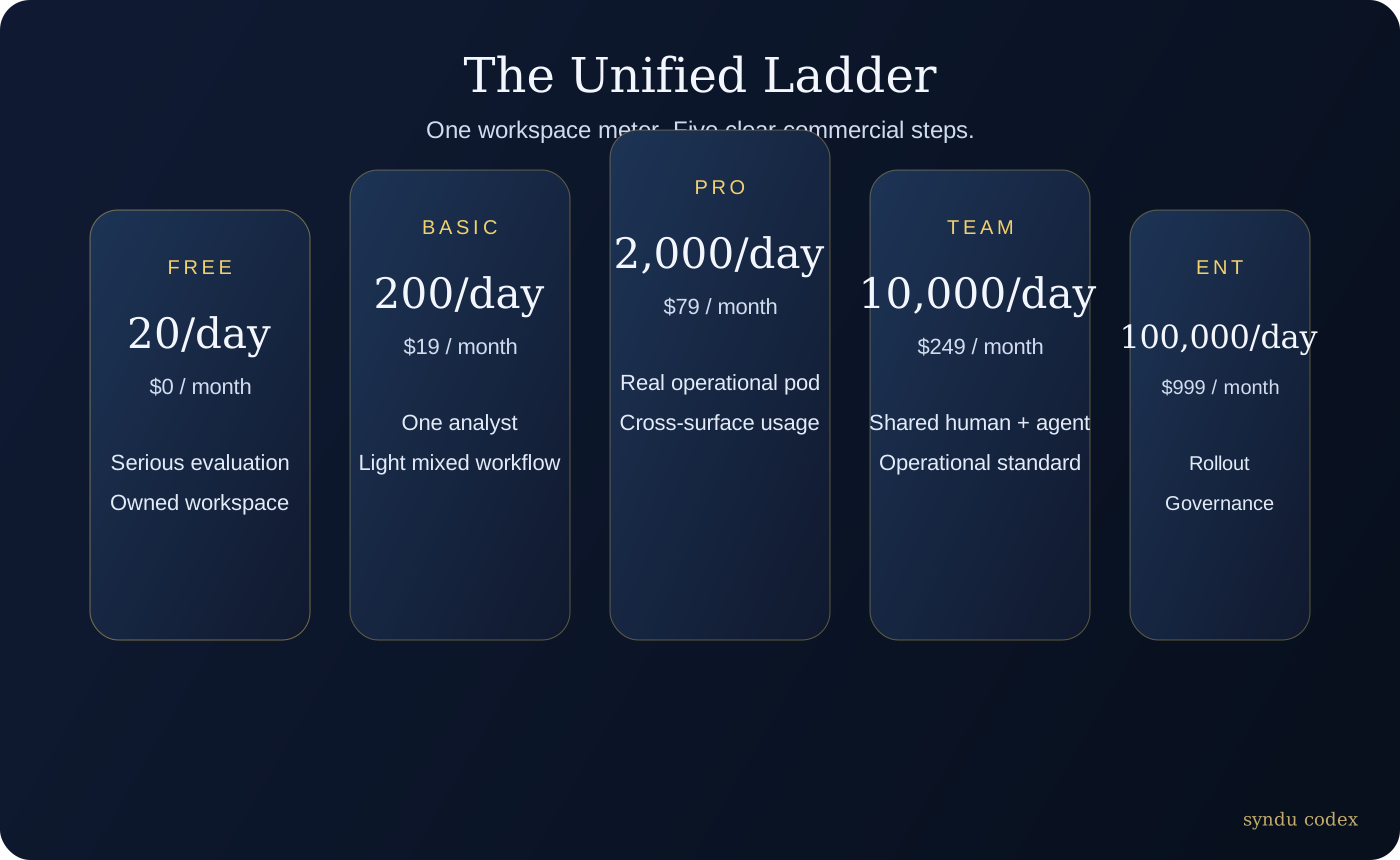
The clean ladder is:
Free
20/day$0/month
An owned workspace meter for serious evaluation and light daily use.
Basic
200/day$19/month
The first paid tier for one active analyst or one light mixed workflow that spans reports, score calls, and agent investigation.
Pro
2,000/day$79/month
The first true operational tier. This is where a real pod, a more aggressive analyst, or one useful agent loop can work without constant boundary friction.
Team
10,000/day$249/month
This is where the workspace stops behaving like one operator and starts behaving like a shared operating surface across multiple humans and agents.
Enterprise
100,000/day$999/month
This is broad rollout. The meter is still unified, but the buyer is now provisioning a real organizational system rather than solving for one analyst seat.
5. How organizations actually climb
The production field made something else very clear:
commercial pressure does not begin when one person asks a few more questions.
It begins when a workspace broadens.
That broadening can happen in several ways:
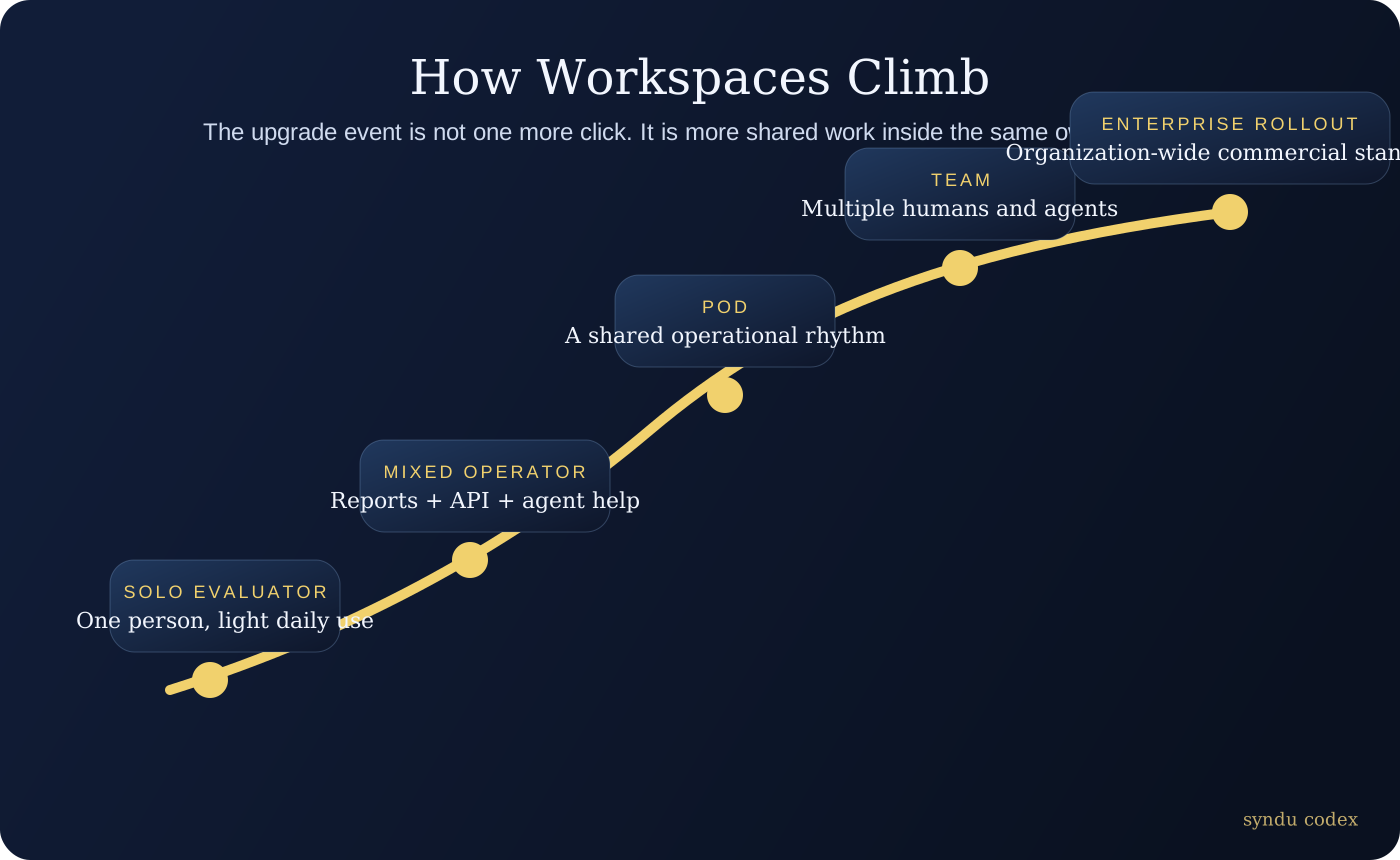
Stage 1: Solo evaluation
One person reads a few shells, maybe tries an API call, maybe tests one MCP workflow.
This is where Free should work beautifully.
Stage 2: Mixed single-operator workflow
One analyst now mixes:
- report reads
- API score calls
- agentic investigation
That customer is no longer evaluating the existence of the product. They are integrating it into a real loop.
This is the Basic customer.
Stage 3: Pod behavior
A second human, a shared bot, or an MCP-assisted workflow joins the same workspace rhythm.
This is the commercial step-change.
Not because the usage is suddenly huge, but because the product is no longer personal. It is becoming shared.
This is where Pro begins to make sense.
Stage 4: Team standardization
Multiple analysts and agents are now using the same workspace with intent.
At this point, the customer is not buying queries. They are buying operational continuity:
- one commercial boundary
- one shared meter
- one reusable memory layer
- one evidence graph
This is the Team customer.
Stage 5: Rollout
Once multiple functions or large automated estates are spending the meter, the conversation is no longer about one analyst workflow. It is about rollout, governance, and internal standardization.
That is Enterprise.
6. Why one meter is commercially stronger
The best commercial models do not merely maximize revenue extraction.
They reduce confusion.
A customer should not have to ask:
- does this spend web quota?
- does this spend API quota?
- does this spend MCP quota?
They should know:
- this spends my workspace meter
That clarity matters for trust.
It also matters for upgrades.
When the meter is unified:
- the free tier stops leaking value through product-surface fragmentation
- the paid tiers become easier to compare
- the customer can reason about growth without decoding internal product boundaries
And most importantly:
the subscription starts to feel like ownership of access, not just the purchase of more allowance.
7. The real commercial sentence
The wrong sentence is:
buy more quota
The right sentence is:
move your work into a workspace that owns the meter
That is the whole point of the redesign.
The new pricing system is not only simpler for billing.
It is simpler for the customer to understand, simpler for the product to communicate, and much closer to the way the live field actually behaves.
The server data showed us that the market was already telling us the answer.
Syndu should be priced the way it is used:
as one investigative system, with one meter, across every surface that matters.