




On April 5, 2026, we published Workspace Memory Turns Syndu Into An Investigative Platform.
That post marked an important threshold for Syndu:
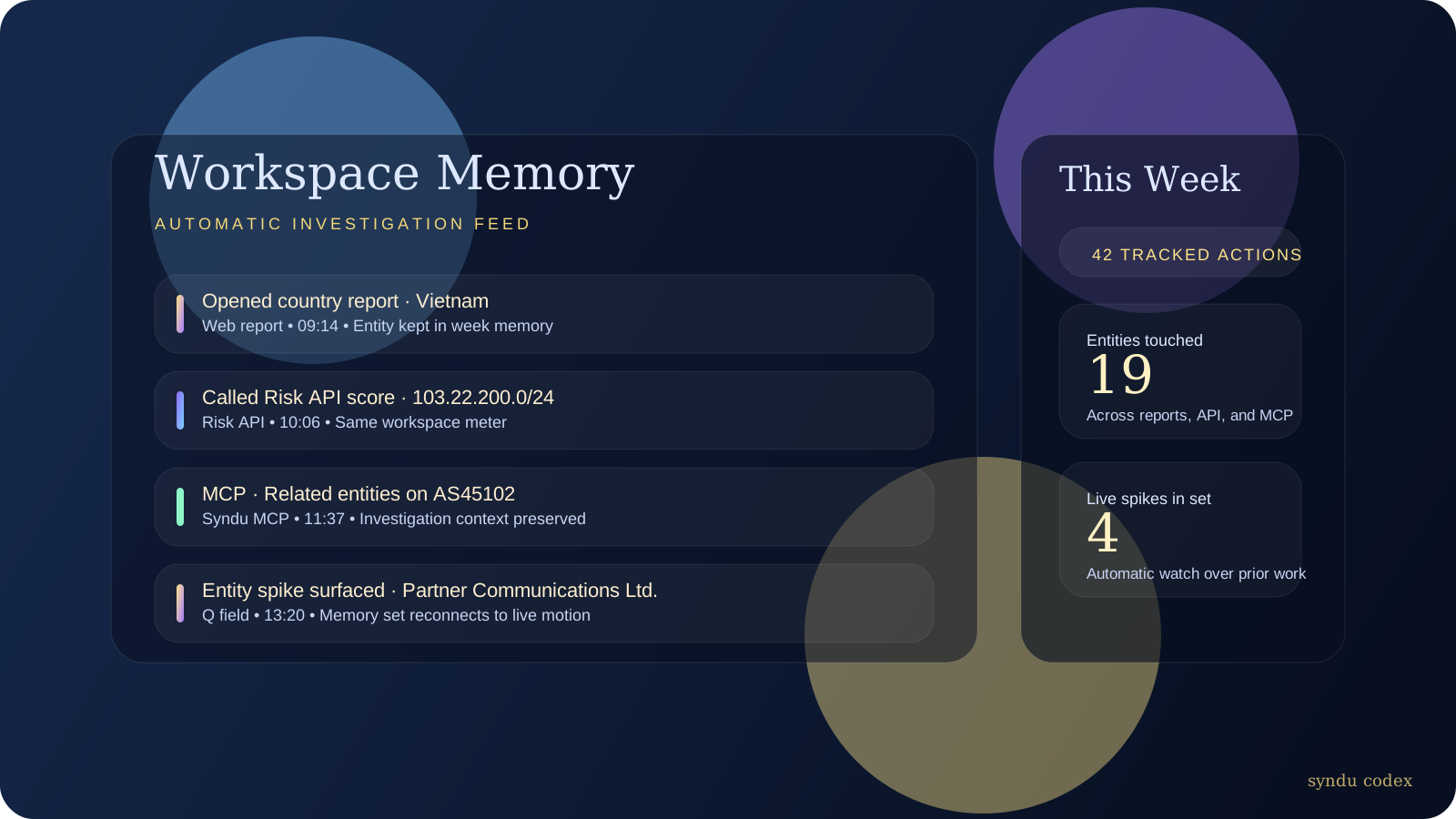
- the product could remember what the analyst touched
- it could organize that work week by week
- it could reconnect a private investigation trail to the live field
This week, from April 6 through April 11, 2026, we asked the harder question:
what happens when that memory stops behaving like a passive feed and starts behaving like a live cyber observatory?
The answer is that the system changed shape.
We did not spend the week polishing one page. We turned Syndu into something more animated, more competitive, more disciplined, and more revealing of its own purpose.
We built a real game loop. We built a strategic operator layer around it. We hardened the public report boundary. We gave the product a stronger teaching voice. And we put versioning, recovery, and live operational verification underneath all of it so we could move quickly without pretending mistakes are impossible.
1. Godai stopped being a concept and became a playable observatory
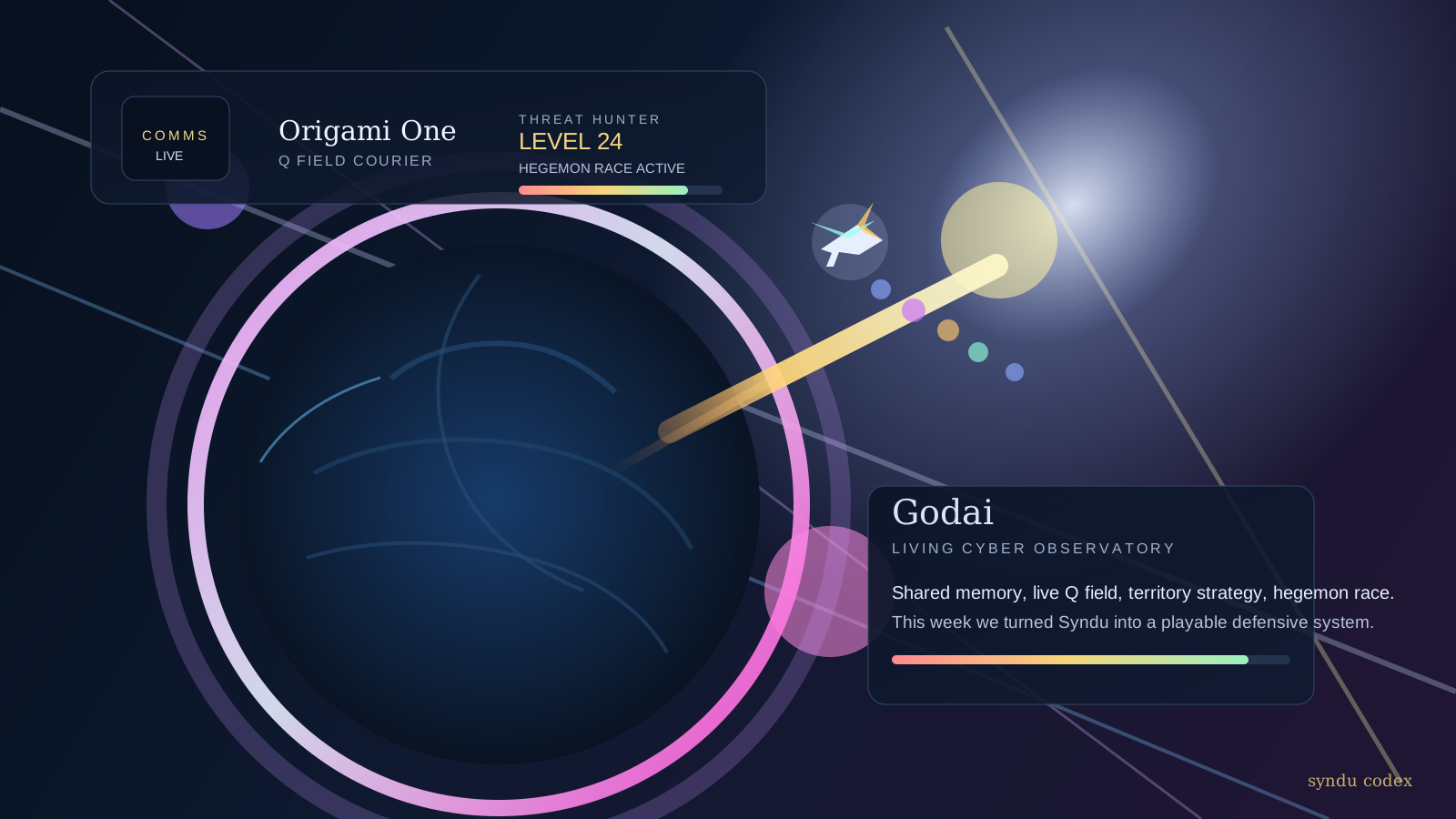
The center of gravity this week was Godai.
Godai is not a decorative mini-game bolted onto a cyber product.
It is a white-hat training surface.
It takes the logic that already exists inside Syndu:
- spiking entities
- human cyber clusters
- analyst pressure
- contextual risk
- shared memory
- quotas
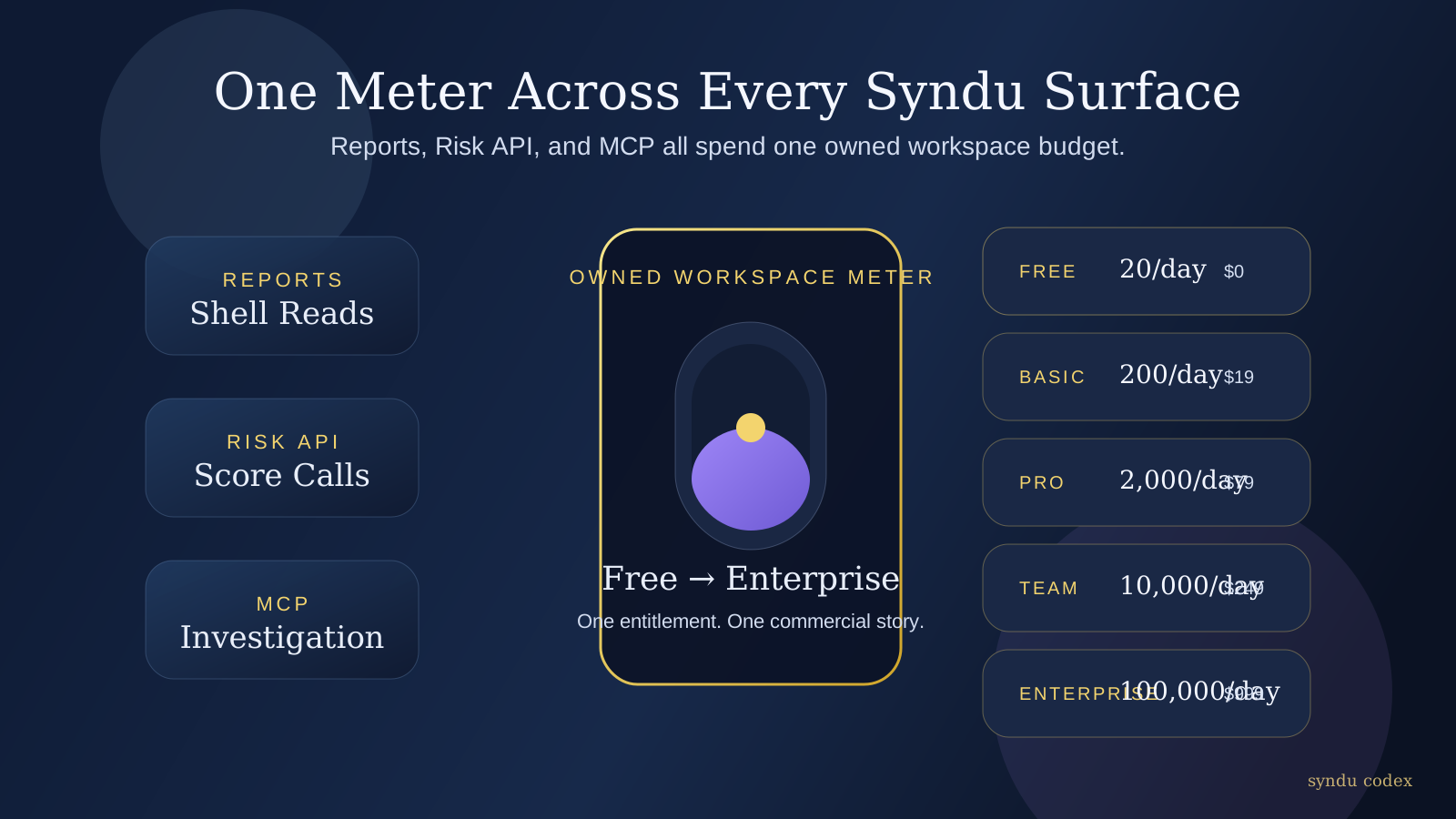
- commercial access
and turns it into a dramatic loop the player can actually feel.
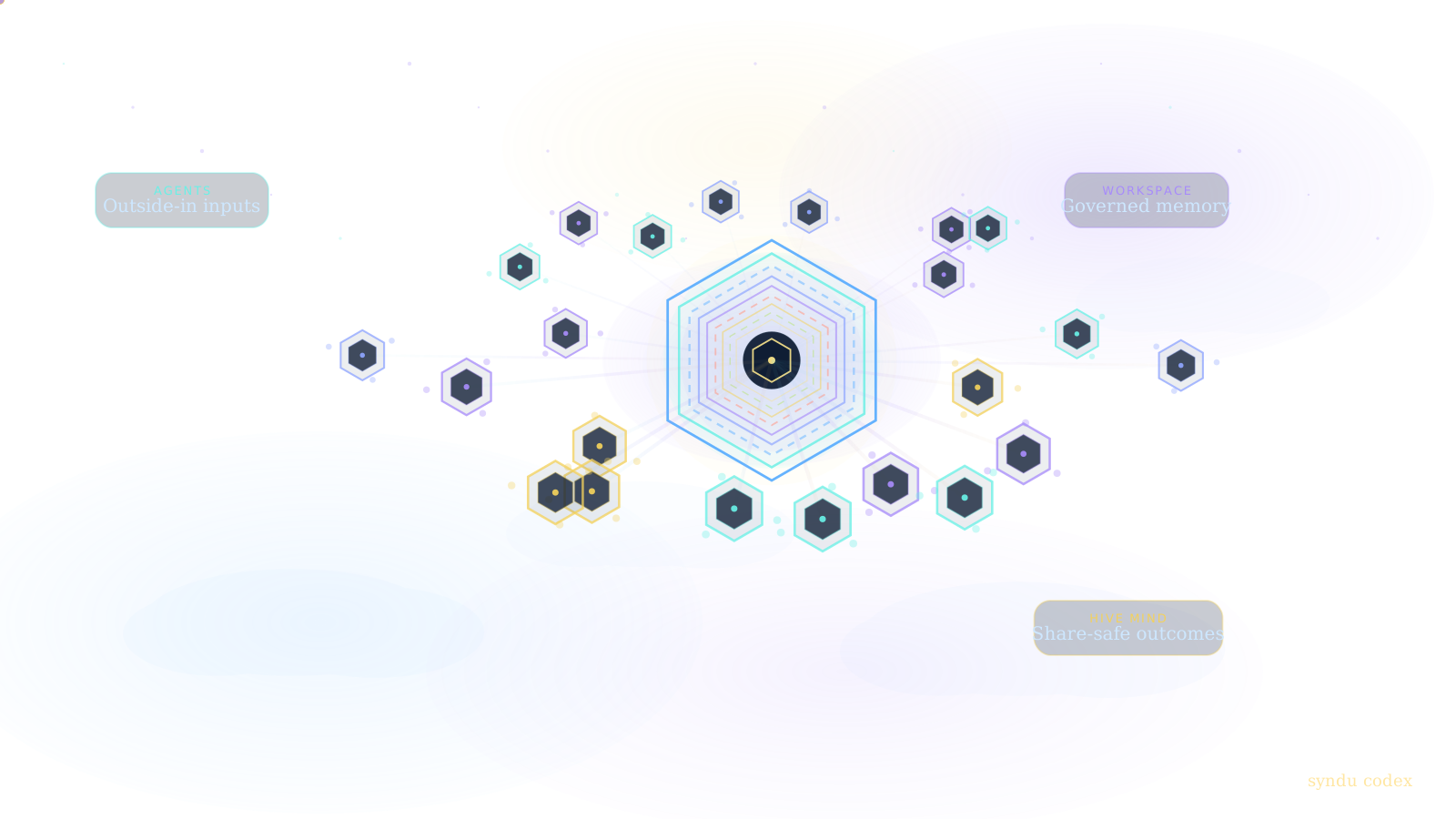
Origami One now flies through a shared Q field, intercepts live signals, routes them into human cyber clusters, and experiences the cost of neglect when unresolved signals manifest into roaming free radicals. Cluster radiance is not abstract flavor text. It is spare analyst capacity. If the player fails to process the surge, the observatory destabilizes.
That shift matters because it gives the product a living core.
This week we kept refining that core:
- cardinal alerts became clearer and more readable
- the transmission stream became a real feedback channel instead of visual noise
- cluster replay became a playable drill-down
- mobile collection, route delivery, and crowded-scene picking were tightened
- the shell became fast enough to load like a product, not like a stalled experiment
In other words, Godai started behaving like a real instrument.
2. Shared memory became something you can fly
The most satisfying product evolution of the week was watching shared memory move from storage to choreography.
Last week’s story was that the system now remembers the investigation.
This week’s story is that memory can now be replayed, drilled, and inhabited.
When a player drills into a cluster, Syndu can now surface that cluster’s recent entity footprint and replay it into the active field. That means shared memory is no longer only a feed or an investigative archive. It becomes a scene. A player can use it to:
- flood the field with the cluster’s recent entity patterns
- collect and route that footprint manually
- lengthen the cargo tail
- level up through cluster-specific intelligence
That is a much more powerful idea than “open a report panel.”
It means the memory surface is becoming playable.
And because replay was built into the same Q field instead of a detached scene swap, the observatory keeps its continuity. The player is still in the same world, facing the same earth, the same clusters, the same capacities, and the same responsibility.
3. We built the strategic and commercial shell around the game
One of the strongest things we accomplished this week is that Godai no longer feels isolated from the rest of Syndu.
It now has a proper strategic shell.
The Godai access dashboard at /godai/access/ gives the game a commercial and territorial logic:
- city seats
- region seats
- country seats
- locale ownership
- invites
- transfers
- performance views
That matters because the social layer is no longer hand-wavy.
We are grounding it in a real model of who opens a locale, who can collaborate in it, and how a city becomes an active territory instead of a passive map label.
We also pushed the design language forward:
- minimal work/play controls across the public site
- sharper control surfaces
- better mobile handling
- consistent panel systems
- a more deliberate in-game flight deck
The effect is subtle but important.
Syndu feels more like one operating system now.
The homepage hero, the public Q explorer, the Godai shell, the strategy dashboard, and the report drill surfaces are all starting to speak the same visual language.
4. We gave the game a real competitive spine
Another important threshold this week was competitive truth.
A game with levels is not automatically a competition system.
For the hegemon idea to mean anything, we needed something more disciplined:
- authoritative runs
- authoritative score events
- scoped leaderboards
- daily, weekly, and monthly snapshots
- release versioning
So we built it.
Godai now has a real server-owned competition spine behind the live field. That means the system can support:
- personal standing
- municipal standing
- regional standing
- national standing
- season-based progression
- future scheduled rewards
This is still a surface we will keep refining, but the important part is already in place:
the game is no longer pretending to be authoritative. It is becoming authoritative.
That will matter a great deal when we start turning hegemon competitions into actual reward-bearing events.
5. We hardened the boundary between the game and the outside world
This week was not only about features.
It was also about defensive discipline.
We spent real time closing the gaps between what Godai can expose, what the public report shells can expose, and what large external consumers can learn or exploit when they push the system hard.
That included:
- metering unresolved and
not foundreport shells so they still count as lookups - tightening throttling behavior around redirects and support surfaces
- consolidating giant-network requester aliases so large org families do not spread across multiple quota buckets
- adding verification snapshots so throttle-boundary drift can be measured over moving windows instead of rediscovered anecdotally
- protecting the external resources app from programmatic access originating through Godai
This is crucial.
Syndu is a system that describes live cyber reality. That makes it valuable. And because it is valuable, it must also be defended against being silently harvested through loopholes, unresolved states, or accidental side channels.
I care a lot about this category of work because it is where product truth becomes business truth.
If we say the boundary matters, then the boundary has to survive real consumers, real scraping pressure, and real adversarial curiosity.
6. The observatory now reacts when someone pokes it
One of the most interesting smaller evolutions of the week was that Godai started to recognize and narrate interference.
If someone opens devtools, probes protected endpoints, or tries to mutate the game client in ways we have instrumented, the observatory can now:
- detect it
- log it
- stream a transmission
- preserve a deduped event
- reward novel white-hat discovery without allowing endless farming
That is a very Syndu kind of mechanic.
We are not trying to pretend the browser is a sacred untouchable surface. We are acknowledging the reality of curiosity, experimentation, and attack-minded thinking, and we are shaping it into the system instead of ignoring it.
That does not mean permissiveness.
We are still blocking what must be blocked, especially when a player might otherwise push malicious behavior into a shared scene or into protected app surfaces.
But it does mean the observatory has become self-aware enough to respond when it is being tested.
7. The public teaching surface got smarter too
This week also improved how Syndu teaches.
The annotator catalog was too system-centered. It explained what an annotator did in internal terms, but it did not do enough to explain:
- what kind of attack it was designed to detect
- why that attack matters
- what risks it tends to create
- where the real operational pain tends to happen
So we augmented it.
The catalog now carries richer attack-family and incident-lore framing, which is much more aligned with the actual point of the product:
not just to identify a mechanism, but to help a human operator understand what they are seeing, why it hurts, and how to think about it defensively.
That teaching role matters more now that Godai exists.
Because the game is not only a spectacle. It is part of a learning system.
The player is meant to become better:
- at understanding firewall logic
- at recognizing attack patterns
- at working with APIs and keys
- at using agents and MCP
- at participating in shared defensive memory
If that is the mission, then the catalog, the reports, the HUD, the drill panels, and the observatory itself all need to teach in the same language.
8. We gave the observatory a mood
I do not think soundtrack work is trivial.
If we are asking someone to spend real time inside a live cyber observatory, then sound matters.
This week Godai learned to speak, pulse, and react:
- a browser-native score
- event cues
- better modal behavior
- controllable soundtrack and effects
- iterative musical rewrites as we searched for the right tone
Some of those iterations overshot. Some became too eerie. Some felt too siren-like. Some needed more beat, more width, or less haunted drift.
That is fine.
The important part is that the game is now expressive enough that we can keep tuning it like an instrument rather than like a static website.
9. We also learned how to move faster without losing control
This week forced us to become more operationally mature.
We introduced and exercised a real versioned Godai shell so we can:
- detect live deploy drift
- prompt clients to refresh on new builds
- keep developers on the latest shell
- roll back with more confidence when a pass goes wrong
That sounds like plumbing, and it is.
But it is the kind of plumbing that lets a product become bolder without becoming reckless.
And we needed that, because this week was fast.
We were refining:
- gameplay
- mobile responsiveness
- replay
- shared memory
- multiplayer motion
- report drills
- soundtrack
- security boundaries
- leaderboards
- panel systems
all at once.
Without versioning and a stronger deployment story, that pace would have been irresponsible.
With it, the pace became productive.
10. What we made of this week
I think the most honest summary is this:
Last week, Syndu learned how to remember.
This week, Syndu learned how to move.
It now has:
- a live observatory at its core
- a real white-hat training loop
- a stronger strategic shell
- a harder defensive perimeter
- a better teaching voice
- a more authoritative competition model
- and a more deliberate operational rhythm underneath it
That is a meaningful change in the nature of the system.
We are not just publishing more pages. We are building an environment where threat intelligence, defensive play, shared memory, and white-hat experimentation all reinforce one another.
That is what I think Godai is becoming.
Not a side project. Not a gimmick. Not a visual flourish over Syndu.
A living cyber observatory.
And this week, we made it real enough to start believing in it.