




Over the last stretch of work on Syndu, the most important thing we changed was not a schema, an SVG, a quota rule, or a plugin setting.
It was the center of gravity.
For a while, Syndu could be described a few different ways and still sound plausible:
- an outside-in cyber and fraud data platform,
- a report universe with a Risk API and an MCP server,
- a threat observatory with shared memory,
- or a collection of useful surfaces for analysts, applications, and agents.
All of those descriptions contained some truth. None of them was sharp enough to lead the company.
The recalibration brief forced the issue.
Instead of asking what Syndu contains, we asked a better question:
what is the one sentence that makes the rest of the system line up?
By the end of the evaluation, the answer was clear:
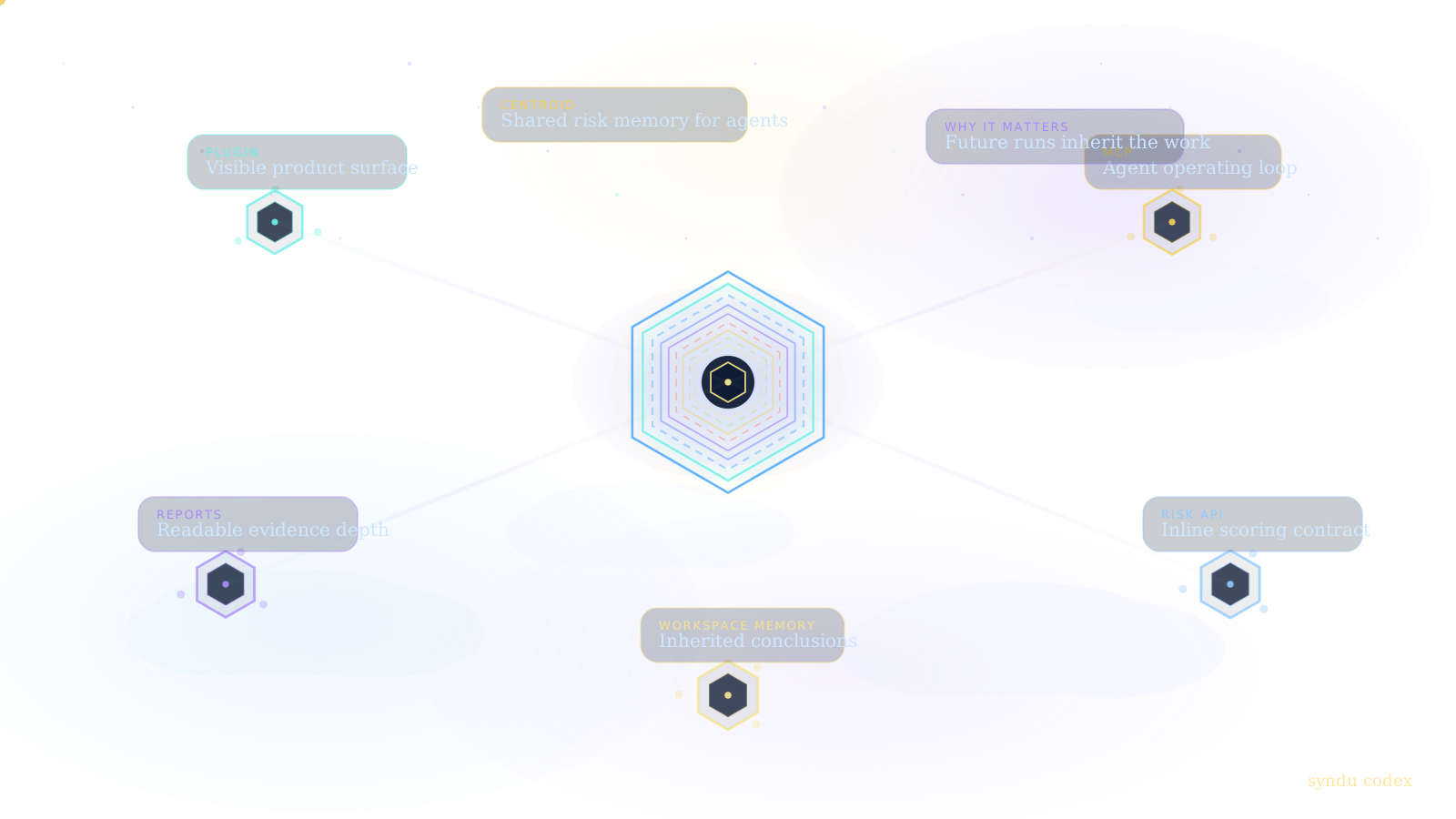
Syndu is the shared risk memory layer for computer-using agents.
That is the centroid we found.
It is the sentence that makes the product hierarchy, the website, the plugin, the MCP offering, the workspace model, the quotas, and the onboarding flow all point in the same direction.
1. We were not missing capabilities. We were missing a center.
This is what made the recalibration unusually valuable.
Syndu did not have a feature vacuum. In fact, the opposite was true.
The system already had:
- a real report universe,
- a public Risk API,
- a hosted MCP surface,
- governed workspace memory,
- share-safe hive collaboration,
- a plugin install flow,
- smart-panel onboarding pages,
- a pricing ladder,
- quota ownership logic,
- and a live production website with growing traffic.
The problem was not the absence of product. The problem was that the public story still described parallel surfaces rather than one operating system.
That ambiguity is expensive.
When a buyer lands on a site and sees reports, APIs, MCP, dashboards, pricing, memory, and investigation language all at once, they need to know what the thing actually is.
If the answer is fuzzy, every surface starts competing with the others for the role of “the main thing.”
That is how product drift happens in public.
The recalibration made the opposite move. It said:
- there is one center,
- there is one main commercial surface,
- and the rest should explain, support, and prove that center.
2. The centroid is not “protocol support.” It is inherited risk context.
The new sentence matters because it tells us what Syndu does that a raw model call or disposable chat memory does not.
Syndu helps computer-using agents:
- get outside-in risk context,
- preserve approved conclusions,
- let future runs inherit the work instead of repeating it.
That is a much more durable category than “hosted cyber-and-fraud investigation via MCP.”
Why?
Because MCP is not the end of the story. It is the connection contract.
The product value is higher up:
- one agent investigates,
- one operator approves the conclusion,
- the workspace keeps the result,
- the next run starts ahead.
That is why the phrase shared risk memory is stronger than a long list of technical surfaces. It names the thing the customer is actually buying.
3. Once the centroid was clear, the hierarchy became obvious
The hardest part of category work is often deciding what gets demoted.
That happened here too.
The recalibration made several structural conclusions much easier:
| Before | Problem | After |
|---|---|---|
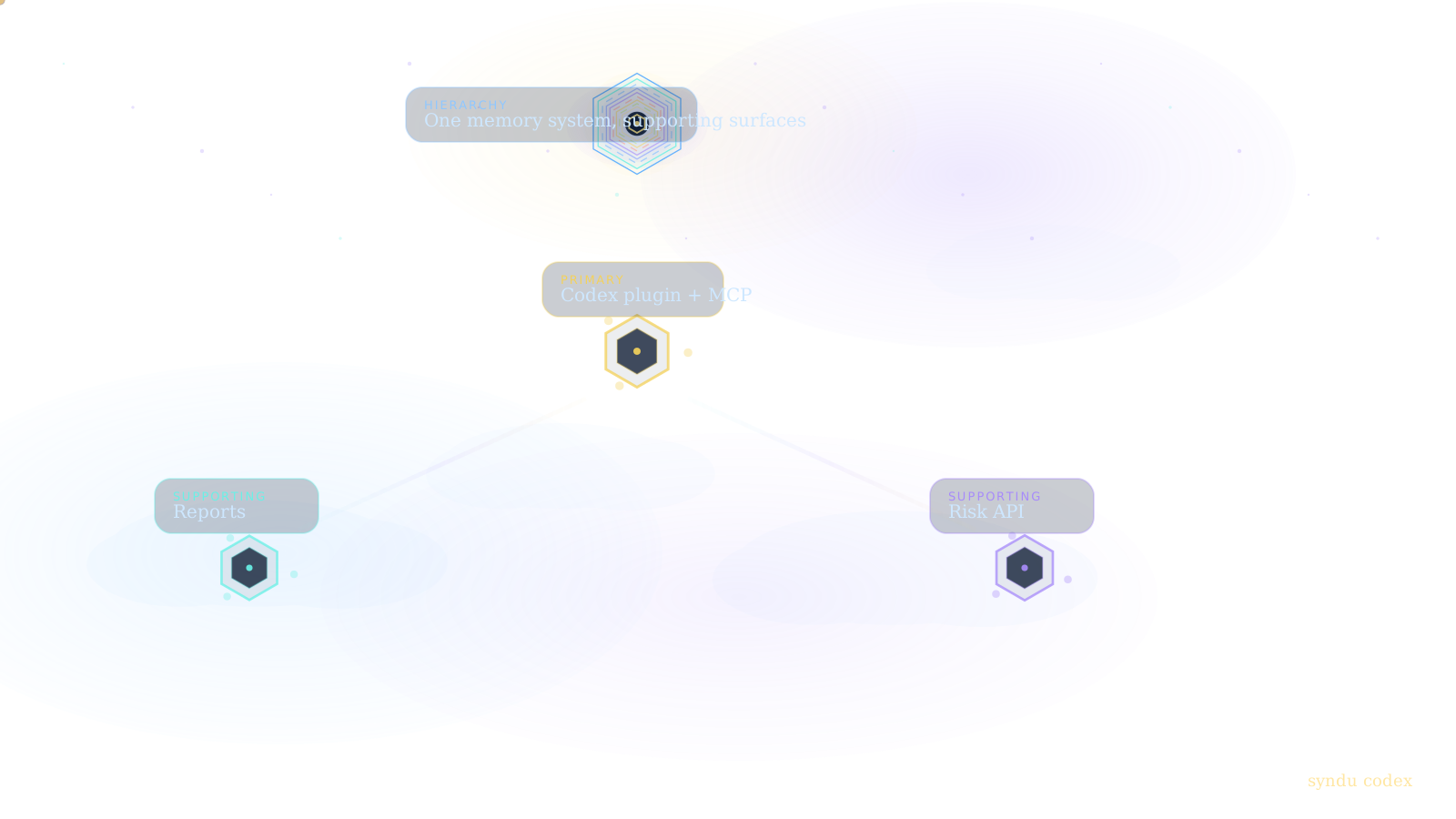
| Reports, API, and MCP all looked like co-equal parent products | The story felt horizontal instead of directional | Plugin + MCP become the primary operating surface |
| “Shared cyber-and-fraud context” led much of the site | Accurate but too broad and too technical | “Shared risk memory for computer-using agents” leads |
| Reports were implicitly treated as the public center | Buyers could mistake the readable shell for the core product | Reports become a readable proof and exploration layer |
| Risk API looked like another main product line | It is useful, but it is not the strongest commercial wedge | Risk API becomes a supporting integration surface |
| The plugin could be read as a technical add-on | It is actually the product surface for Codex users | The plugin becomes the installable commercial surface |
This is not cosmetic hierarchy.
It changes the order in which a buyer understands Syndu:
- first, as a memory system for agents,
- then, as a plugin they can install,
- then, as an MCP operating loop,
- and only after that, as a report universe and scoring API that support the same memory system.
That is a better story because it matches the implementation we have actually been building.
4. The implementation had to follow the message
One reason I like this recalibration is that it did not stay in strategy-document land for long.
The new center immediately exposed a set of implementation truths.
If Syndu says it is shared risk memory for agents, then:
- the homepage cannot lead like a generic cyber data platform,
- the plugin page cannot read like protocol setup notes,
- the MCP page cannot sound like an internal specification,
- workspace ownership cannot be ambiguous,
- and the onboarding funnel cannot strand the user on quota dead ends or unclear identity boundaries.
That is why the work spread across product, design, and operations at the same time.
The homepage changed
The hero stopped leading with a broad “shared cyber-and-fraud context” sentence and started leading with what the buyer actually needs:
give computer-using agents outside-in context they can inherit.
That change sounds small, but it is structurally important. It moves the site from “what Syndu contains” to “what future runs get.”
The platform brief changed
The old public story treated multiple surfaces as peers. The rewritten page now behaves more like a real explanation of the system:
- what agents get,
- how shared memory compounds,
- how reports and the Risk API fit underneath the same operating center.
The plugin changed
The Codex plugin is now described as the product surface, not merely as an install helper for the hosted MCP server.
That matters because the buyer is not shopping for a protocol. The buyer is shopping for a way to make Codex work with inherited risk context and governed memory.
The MCP page changed
The MCP page moved closer to the right thesis too:
- less protocol-era taxonomy,
- more agent workflow,
- more emphasis on what survives after the chat,
- more emphasis on preserving outcomes instead of only explaining scores.
5. The quota and onboarding work matters more than it first appears
One of the most useful side effects of the recalibration is that it clarified how identity and quota should be explained.
If the product promise is that Syndu becomes the user’s governed workspace memory, then the system cannot behave as if the user is permanently an anonymous network visitor.
That forced a cleaner product truth:
- unidentified visitors consume from shared network quota,
- identified members consume from workspace quota,
- and even the free plan should create that ownership handoff.
That is a more agentic-era story too.
A user is not merely “getting more quota” when they sign up.
They are moving from an anonymous shared pool into a durable workspace that can:
- preserve conclusions,
- own credentials,
- hold MCP configuration,
- track plan state,
- and carry memory across future runs.
The soft-throttle page now matters differently because of that. It is not just a throttle notice. It is a handoff from anonymous browsing into durable workspace ownership.
That is exactly the kind of product move the old story struggled to express.
6. Privacy, account closure, and ownership suddenly fit better too
The centroid helped here as well.
A product that sells shared risk memory for agents must be unusually clear about what does not belong in that memory system.
That is why the privacy work and account-closure work were not side quests. They were part of the same alignment effort.
If Syndu is a trustworthy context layer, then:
- connected-user behavior should not leak into the public evidence graph,
- payment callbacks should not become report truth,
- account-control and support surfaces should stay outside the investigative telemetry universe,
- and closing an account should actually reset the user into a clean slate.
Those corrections make more sense once the product is centered correctly.
The memory layer becomes more valuable when the boundaries around it are more trustworthy.
7. This is also a design conclusion
The visual system ended up reinforcing the same product idea.
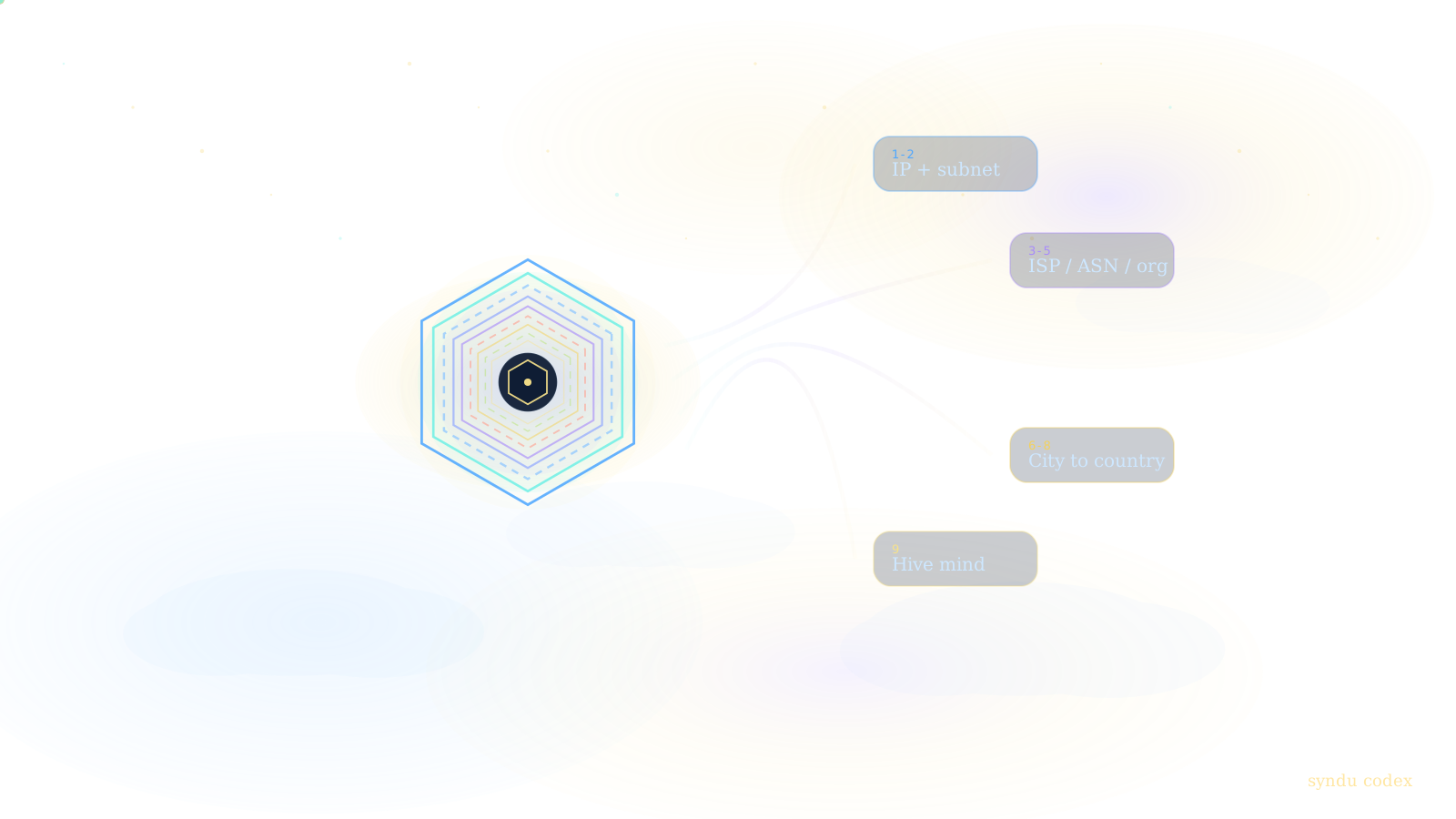
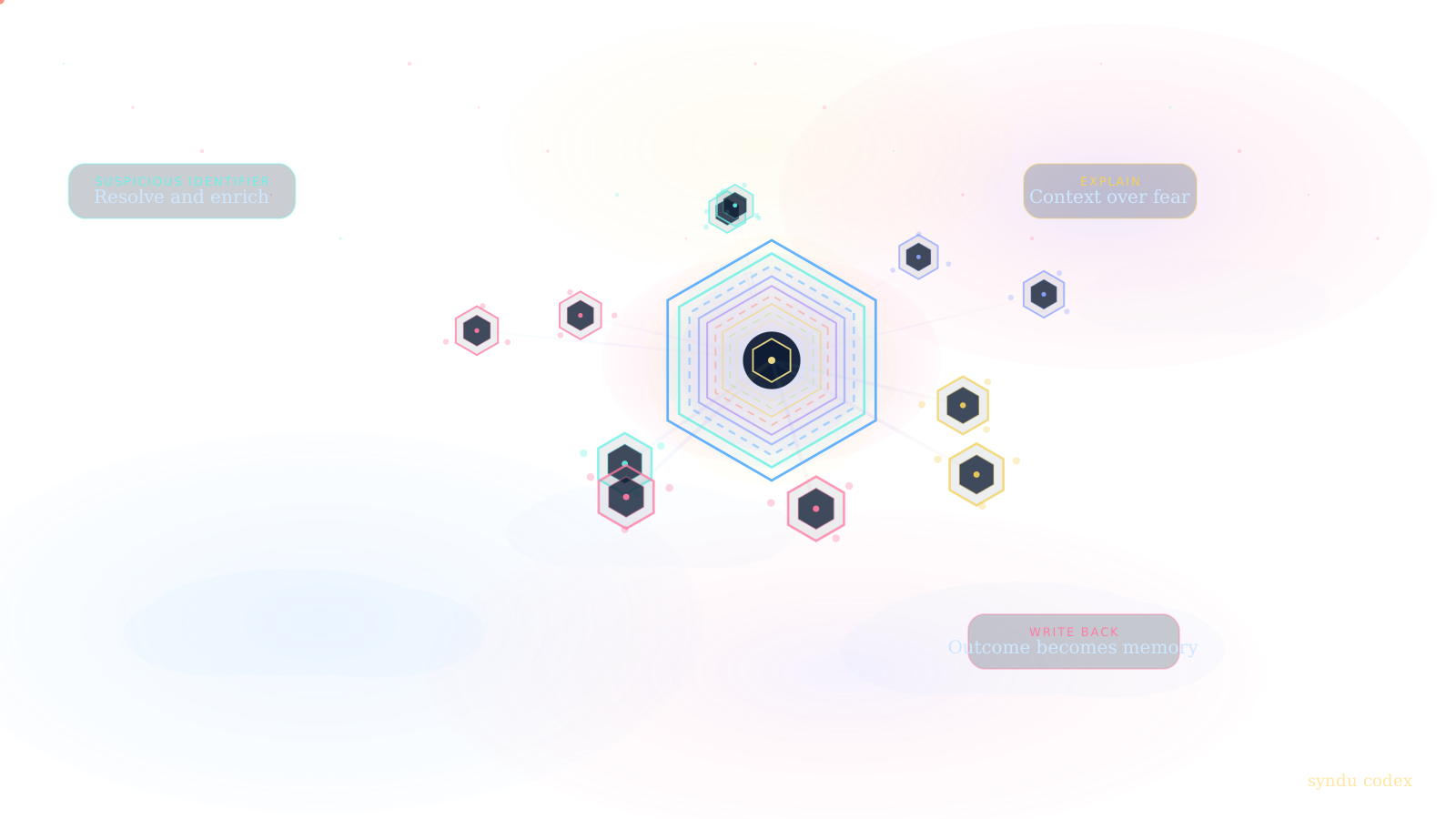
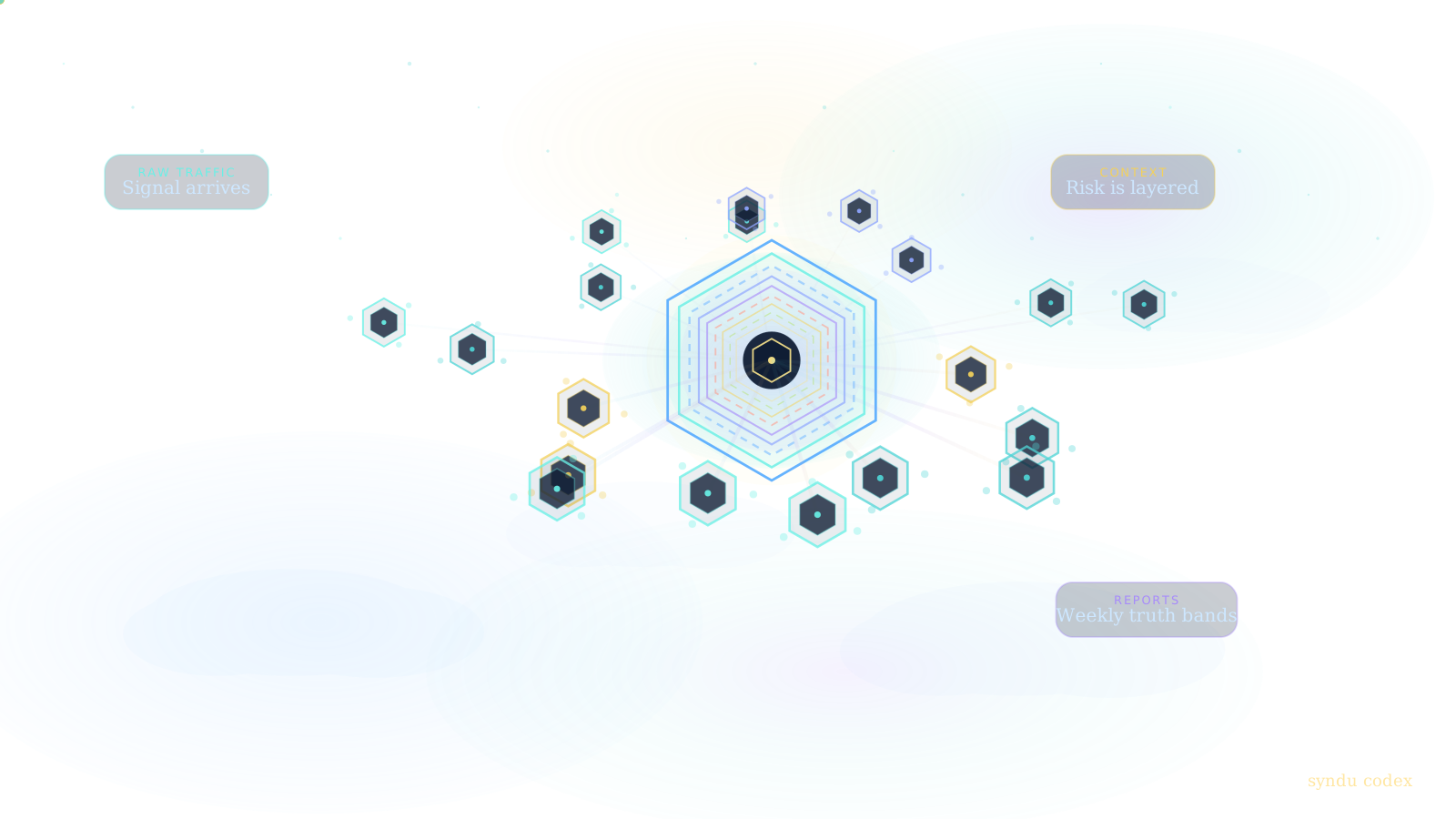
The nine-layer sigil, the hive nodes, the two-way animated traffic, the transparent illustrations, and the smart-panel shell all work better when they describe one core with supporting surfaces instead of several disconnected product lines.
That is why the current visual language feels more coherent now.
The sigil is not decorative filler.
It stands for:
- a layered model,
- one shared center,
- and outcomes moving between governed memory and reusable agent workflows.
The better the product sentence became, the easier it was to tell what the illustrations should do.
8. What a buyer should understand now
If the recalibration did its job, a new buyer should be able to understand Syndu in roughly this order:
- Syndu gives computer-using agents inherited risk context.
- The installable surface is the plugin.
- The live operating loop is MCP.
- The workspace preserves approved conclusions.
- Reports and the Risk API remain supporting proof and integration layers.
- Share-safe outcomes can compound across agents and operators instead of disappearing with the session.
That sequence is much stronger than:
- “we have reports,”
- “we also have an API,”
- “we also have MCP,”
- “we also have memory.”
The first sequence describes a product. The second sequence describes inventory.
9. Why I think this matters beyond Syndu
This recalibration is not just useful for one company website.
I think it reflects a broader truth about the agentic era.
A lot of products right now can provide:
- a model call,
- a lookup,
- a score,
- a classification,
- or a clever answer in the moment.
Far fewer can provide:
- reusable outside-in context,
- durable ownership,
- governed memory,
- and a way for future agents to inherit what has already been learned.
That is a better place to build from.
It is more defensible, more operationally honest, and more aligned with what teams actually need once they stop experimenting and start running computer-using agents in production.
10. The centroid should now govern the next wave of work
That is the real reason to write this post.
The recalibration only matters if it becomes a rule, not just a moment of clarity.
From here, the test is simple:
Whenever we build or rewrite a surface, we should ask:
- does this strengthen Syndu as shared risk memory for agents?
- does it make inheritance clearer?
- does it clarify which surface is primary and which surfaces are supporting?
- does it speak to the buyer in agent-era terms instead of platform-era jargon?
If the answer is yes, it belongs.
If the answer is no, it is probably drift.
That is what the centroid gives us.
Not just better copy.
A better way to decide.
And that, in the end, is what we were really trying to find.